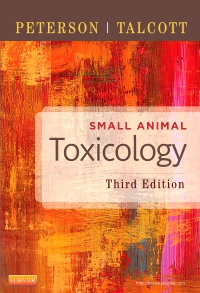

Small Animal Toxicology, Elsevier eBook on VitalSource, 3rd Edition
Elsevier eBook on VitalSource
Now $82.79
Diagnose and determine treatment for toxic exposures in small animals with this quick reference! Small Animal Toxicology, 3rd Edition covers hundreds of potentially toxic substances, providing the information you need to manage emergency treatment and prevent poisonings in companion animals. To help you identify an unknown poison, this guide provides a list of potential toxins based on clinical signs or symptoms. It also includes a NEW color insert with 85 full-color photographs of toxic plants and of lesions associated with various poisonings. Written by respected veterinarian Michael E. Peterson and board-certified veterinary toxicologist Patricia A. Talcott, along with a team of expert contributors, this edition covers a wide variety of topics including toxicodynamics, toxicokinetics, effective history taking, recognizing clinical signs of toxic exposures, managing emergencies, and supportive care of the poisoned patient.
-
- 20 new chapters have been added
- New topics include a list of toxicants affecting body systems, management of toxins in pregnancy, diagnostic toxicology, bacterial toxins, and cosmetic/toilet articles
- Snake-bite injuries are treated in two separate, expanded chapters: Pit Vipers and Coral Snakes
- Section on pharmaceuticals includes bromides, anticonvulsants, tricycle antidepressants, monoamine oxidize inhibitors, B-adrenergic toxicities, and vitamins A and D
- Additional specific toxicants are covered, including Amitraz, hydramethylon, ethanol, mercury, toad toxins, poisonous frogs, salamanders, newts and venomous arthropods• Additional specific toxicants are covered, including Amitraz, hydramethylon, ethanol, mercury, toad toxins, poisonous frogs, salamanders, newts and venomous arthropods
-
- Comprehensive coverage of toxins/poisons includes the full range of substances from acetaminophen to zinc, including home products, prescription medicines, recreational drugs, and more
- Guidelines to evaluation, diagnosis and treatment include examinations of the source, toxic dose, toxicokinetics, clinical signs, minimum database, confirming tests, treatment progress and differential diagnosis for each specific toxicant
- Coverage of common poisonous substances includes grapes and raisins, nicotine, mercury, mushrooms, Christmas-time plants, and snake and spider venoms
- Toxicological Concepts section provides information on toxicologic principles such as history taking, providing supportive care, and managing emergency treatment
- General Exposures section addresses nontraditional toxicology such as indoor environmental air, pesticides, pharmaceuticals, and toxicities in pregnant and lactating animals
- Miscellaneous Toxicant Groups section covers commonly encountered specific toxicants, the proper use of diagnostic laboratories, use of human poison control centers, and antidotes for specific toxins
- More than 50 international contributors provide up-to-date, authoritative advice on treating poisonings and intoxications
-
-
 Small Animal ToxicologyPaperback
-
-
Section 1: Toxicological Concepts
1. General Toxicological Concepts
2. Toxicokinetics and Toxicodynamics
3. Toxicologic Information Resources
4. Effective Use of Veterinary Poison Center NEW!
5. Effective Use of Human Poison Center
6. Taking a Toxicologic History
7. Approach to Diagnosis and Initial Treatment
8. Selecting a Minimum Database
9. Initial Management of the Poisoned Patient
10. Decontamination
11. General Supportive Care
12. Effective Use of the Diagnostic Lab
Section 2: General Exposures
13. Litigation and Toxicology NEW!
14. Indoor Environmental Quality and Health
15. Responding to Mass Exposures NEW!
16. Reproductive Toxicology of the Male and Female
17. Considerations in the Poisoned Pregnant and Lactating Patient
18. Considerations in the Pediatric Poisoned Patient NEW!
19. Considerations in the Geriatric Poisoned Patient NEW!
20. Poisoning in the Captive Reptile
21. Poisoning in the Small Mammal (pocket pets) NEW!
22. Poisoning in the Avian Patient NEW!
Section 3: Miscellaneous Toxicant Groups
23. Adverse Drug Reactions
24. Miscellaneous Indoor Toxicants
25. "Recreational" Drugs
26. Herbal and Natural Products (homeopathic)
27. Household and Garden Plants
28. Miscellaneous Herbicides, Fungicides, and Nematocides
29. Smoke Inhalation (house fires)
30. Acetaminophen
31. Amitraz
32. Anticoagulant Rodenticides
33. Anticonvulsants
34. Arsenic
35. Botulism
36. Bromethalin
37. Carbon Monoxide
38. Cholecalciferol
39. "Christmas time" Plants
40. Citrus Oils
41. Copper
42. Cyanide
43. Cyanobacteria
44. DEET
45. Diethylene Glycol
46. Ethanol
47. Ethylene Glycol
48. Grapes and Raisins
49. Insects – Hymenoptera
50. Ionophores
51. Iron
52. Ivermectin: Macrolide Antiparasitic Agents
53. Lead
54. Lilies
55. Poisonous Lizards
56. Macadamia Nuts
57. Mercury
58. Metaldehyde
59. Methanol
60. Methylxanthines
61. Metronidazole
62. Mushrooms
63. Mycotoxins
64. Nicotine
65. Nonsteroidal Antiinflammatories
66. Organochlorine Pesticides
67. Organophosphate and Carbamate Pesticides
68. Oxalate-Containing Plants
69. Paraquat
70. Atypical Topical Spot-On Products
71. Petroleum Hydrocarbons
72. Propylene Glycol
73. Pyrethrins and Pyrethroids
74. Ricin
75. Snake Bite – North American Pit Vipers
76. Snake Bite – Coral Snakes
77. Sodium
78. Sodium Monofluoroacetate
79. Spider Envenomation – Black Widow
80. Spider Envenomation – Brown Recluse
81. Strychnine
82. Toads
83. Xylitol NEW!
84. Zinc
85. Zinc Phosphide -
-
Ways of Reading
- The appearance of the text and page layout can be modified according to the capabilities of the reading system (font family and font size, spaces between paragraphs, sentences, words, and letters, as well as color of background and text)
- This e-publication is accessible to the full extent that the file format and types of content allow, on a specific reading device, by default, without necessarily including any additions such as textual descriptions of images or enhanced navigation
- No information about nonvisual reading is available
-
Conformance
- No information is available
-
Navigation
- Table of contents to all chapters of the text via links
- Page list to go to pages from the print source version
-
Rich Content
- No information is available
-
Hazards
- No information is available
-
Product Content
- No information is available
-
Legal Considerations
- No information is available
-
Additional Accessibility Information
- Page breaks included from the original print source
- For readers with color vision deficiency, use of color (e.g., in diagrams, graphics and charts, in prompts, or on buttons inviting a response) is not the sole means of graphical distinction or of conveying information
- E-publication includes basic navigation (usually less detailed than TOC-based navigation)
- Where links, controls or buttons are included in the content, the purpose or functionality of each link, control or button is apparent from the associated text alone - or where it is unclear, separate link, control or button descriptions are provided
- All (or substantially all) textual matter is arranged in a single logical reading order (including text that is visually presented as separate from the main text flow, e.g., in boxouts, captions, tables, footnotes, endnotes, citations, etc.). Non-textual content is also linked from within this logical reading order. (Purely decorative non-text content can be ignored).
- The language of the text has been specified (e.g., via the HTML or XML lang attribute) to optimise text-to-speech (and other alternative renderings), both at the whole document level and, where appropriate, for individual words, phrases or passages in a different language.
-
Ways of Reading

 as described in our