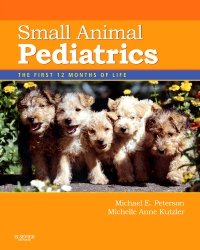

Small Animal Pediatrics - Elsevier eBook on VitalSource, 1st Edition
Elsevier eBook on VitalSource
Now $76.99
A practical reference for the general veterinary clinician, Small Animal Pediatrics: The First 12 Months of Life compiles into a single location the latest information in the rapidly developing field of canine and feline pediatrics. Editors Michael Peterson, DVM, MS, and Michelle Kutzler, DVM, PhD, DACT are joined by more than 40 expert contributors in providing coverage from prenatal care to one year of age. For ease of use, the text is divided into four sections. A General Considerations section opens the book by covering prenatal care of the bitch and queen, birth, normal physical examinations, growth, husbandry, nutrition, care of orphans, neonatal mortality, behavior, emergency and critical care, and immunology. The second section, Common Infectious Diseases, covers bacterial, viral, fungal, rickettsial, and parasitic infections. The third section describes diagnostic and therapeutic approaches to the young patient including radiology, ultrasound, aesthetic and surgical considerations, pain management, pharmacology, and clinical pathology. Finally, the fourth section covers a variety of organ systems with discussions on normal development, congenital conditions, and acquired diseases. The text also includes information that is usually difficult to find, including a pediatric formulary, care of orphan puppies, clinical pathology values, prenatal care, and normal growth and development guidelines. This book will be a significant asset to any veterinary library!
-
- Offers a practical, clinically oriented resource for the unique diagnostic and treatment challenges posed by pediatric and juvenile animal patients.
- Includes comprehensive coverage of all special problems encountered in pet management from birth through the first 12 months of life.
- Provides clear, step-by-step guidelines for important clinical procedures and techniques for the most vulnerable of small animal patients.
- Covers procedures such as intraosseous catheterization and fluid therapy, venipuncture, and tube feeding.
- Includes guidelines for designing and implementing a successful pediatric wellness program tailored to your own practice.
- Discusses infectious diseases in young animals, zoonotic potential, and human public health concerns.
- Provides key new information on puppy and kitten behavioral development including guidance for prevention and intervention for problem behaviors, the leading cause of pet euthanasia.
- Includes guidelines for kennel and cattery health management as well as shelter medicine health considerations.
- Discusses controversial health and ethical issues in veterinary pediatrics, such as ear cropping, tail docking, declawing, and early spay/neuter surgery (including both pro and con positions).
- Includes the latest recommendations for nutritional care of healthy and "special needs" puppies and kittens as well as the post-parturient and nursing dam.
- Offers an easy-to-use, well-organized format for quick and easy access to the most relevant information.
-
-
 Small Animal PediatricsPaperback
-
-
Section I: General Considerations
- Prenatal Care of the Bitch and Queen
- Birth and the First 24 Hours
- History and Physical Examination of the Neonate
- History and Physical Examination of the Weanling and Adolescent
- Growth
- Husbandry of the Neonate
- Standards of Care in Pediatrics
- Nutritional Requirements and Feeding of Growing Puppies and Kittens
- Care of the Orphaned Puppy and Kitten
- Emergency and Critical Care Issues
- Neonatal and Pediatric Mortality
- Feline Behavioral Development
- Canine Behavioral Development
- Immunologic Development and Immunization
- Bacterial Infections
- Viral Infections
- Fungal Infections
- Diseases Formerly Known as Rickettsial: The Rickettsioses, Ehrlichioses, Anaplasmoses, and Neorickettsial and Coxiella Infections
- Parasitic and Protozoal Diseases
- Approach to the Febrile Patient
- Radiographic Considerations of the Young Patient
- Ultrasonography of the Young Patient
- Anesthesia in the Pediatric Patient
- Surgical Considerations in the Young Patient
- Pediatric Fracture Management
- Pain Assessment and Management
- Pharmacological Considerations in the Young Patient
- Toxicological Considerations in the Young Patient
- Effective Use of a Veterinary Medical Diagnostic Laboratory
- Clinical Chemistry of the Puppy and Kitten
- Postmortem Examination of the Puppy and Kitten
- The Cardiovascular System
- The Hematologic and Lymphoid Systems
- The Respiratory System
- Dentistry and the Oral Cavity
- The Gastrointestinal Tract
- The Liver, Biliary Tract, and Exocrine Pancreas
- The Urinary System
- The Reproductive Tract
- The Neurologic System
- The Skin and Ear
- The Musculoskeletal System
- The Eye
- Clinical Approach to Nutritional Conditions
- The Endocrine System
- Selected Zoonotic Diseases: Puppies and Kittens
Section II: Common Infectious Diseases in Puppies and Kittens
Section III: Diagnostic and Therapeutic Approaches to the Pediatric Patient
Section IV: Systematic Clinical Approach to Diagnosis and Treatment of Pediatric Conditions
-
-
Ways of Reading
- The appearance of the text and page layout can be modified according to the capabilities of the reading system (font family and font size, spaces between paragraphs, sentences, words, and letters, as well as color of background and text)
- This e-publication is accessible to the full extent that the file format and types of content allow, on a specific reading device, by default, without necessarily including any additions such as textual descriptions of images or enhanced navigation
- All content can be read as read aloud speech or dynamic braille
-
Conformance
- For detailed accessibility information, see Elsevier's website at https://www.elsevier.com/about/accessibility
- For queries regarding accessibility information, contact [email protected]
- The publication was certified on 07-04-2026
-
Navigation
- Table of contents to all chapters of the text via links
- Page list to go to pages from the print source version
-
Rich Content
- No information is available
-
Hazards
- No information is available
-
Product Content
- No information is available
-
Legal Considerations
- Elsevier is committed to making our eBooks accessible and complying with applicable laws. Given our vast library of titles, there are some cases where making an eBook fully accessible presents unique challenges, and including full features could transform its nature to no longer serve its primary purpose or result in a disproportionate burden for the publisher. As a result this eBook may have limited accessibility. See more at https://www.elsevier.com/en-gb/about/accessibility.
- Please refer to our disproportionate burden or fundamental modification statements.
-
Additional Accessibility Information
- Page breaks included from the original print source
- E-publication includes basic navigation (usually less detailed than TOC-based navigation)
- All (or substantially all) textual matter is arranged in a single logical reading order (including text that is visually presented as separate from the main text flow, e.g., in boxouts, captions, tables, footnotes, endnotes, citations, etc.). Non-textual content is also linked from within this logical reading order. (Purely decorative non-text content can be ignored).
- The language of the text has been specified (e.g., via the HTML or XML lang attribute) to optimise text-to-speech (and other alternative renderings), both at the whole document level and, where appropriate, for individual words, phrases or passages in a different language.
-
Ways of Reading

 as described in our