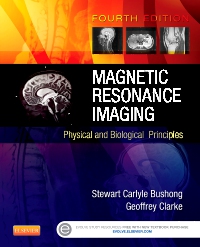

Magnetic Resonance Imaging - Elsevier eBook on VitalSource, 4th Edition
Elsevier eBook on VitalSource
Magnetic Resonance Imaging: Physical and Biological Principles, 4th Edition offers comprehensive, well-illustrated coverage on this specialized subject at a level that does not require an extensive background in math and physics. It covers the fundamentals and principles of conventional MRI along with the latest fast imaging techniques and their applications. Beginning with an overview of the fundamentals of electricity and magnetism (Part 1), Parts 2 and 3 present an in-depth explanation of how MRI works. The latest imaging methods are presented in Parts 4 and 5, and the final section (Part 6) covers personnel and patient safety and administration issues. This book is perfect for student radiographers and practicing technologists preparing to take the MRI advanced certification exam offered by the American Registry of Radiologic Technologists (ARRT).
-
- NEW! Two MRI practice exams that mirror the test items in each ARRT category have been added to the end of the text to help you replicate the ARRT exam experience.
- NEW! Chapter on Partially Parallel Magnetic Resonance Imaging increases the comprehensiveness of the text.
- NEW! Updated key terms have been added to each chapter with an updated glossary defining each term.
-
- NEW! Two MRI practice exams that mirror the test items in each ARRT category have been added to the end of the text to allow students to replicate the ARRT exam experience.
- NEW! Instructor resources on Evolve feature a text bank, PowerPoint slides, and an image collection.
- NEW! Chapter on Partially Parallel Magnetic Resonance Imaging increases the comprehensiveness of the text.
- NEW! Updated key terms have been added to each chapter with an updated glossary defining each term.
- Challenge questions at the end of each chapter help students assess their comprehension.
- Chapter outlines and objectives assist students in following the hierarchy of material in the text.
- Penguin boxes highlight key points in the book to help students retain the most important information and concepts in the text.
-
-
 Magnetic Resonance ImagingPaperback
-
-
Part I: Fundamentals
1. An Overview of Magnetic Resonance Imaging
2. Electricity and Magnetism
3. Nuclear Magnetism
4. Equilibrium-SaturationPart II: The Magnetic Resonance Image
5. Radiofrequency Pulse Sequences
6. Magnetic Resonance Imaging Tissue Parameters
7. Manipulating Magnetic Resonance Image Contrast
8. Fourier Transforms in Magnetic Resonance ImagingPart III: The Imaging System
9. Magnetic Resonance Imaging Hardware
10. Primary Magnetic Resonance Imaging Magnets
11. Secondary Magnetic Resonance Imaging MagnetsPart IV: Image Formation
12. Digital Imaging
13. A Walk Through the Spatial Frequency Domain
14. The Musical Score
15. Magnetic Resonance ImagesPart V: Pulse Sequences
16. Spin Echo Imaging
17. Chemical Shift and Magnetization Transfer
18. Steady State Gradient Echo Imaging
19. Hybrid Fast Imaging Techniques
20. Echo Planar ImagingPart VI: Applications
21. Nuclear Magnetic Resonance Spectroscopy
22. Partially Parallel Magnetic Resonance Imaging
23. Magnetic Resonance Angiography
24. Perfusion Imaging
25. Diffusion Imaging
26. Cardiac Magnetic Resonance ImagingPart VII: Safety
27. Contrast Agents and Magnetic Resonance Imaging
28. Magnetic Resonance Imaging Artifacts
29. Biological Effects of Magnetic Resonance Imaging
30. Managing a Magnetic Resonance Imaging SystemAppendix A: The Bloch Equations
Appendix B: Additional Resources
Practice Examinations
Answers to Challenge Questions
Answers to Practice Examinations
Glossary of Magnetic Resonance Imaging Terms
Index -
-
Ways of Reading
- The appearance of the text and page layout can be modified according to the capabilities of the reading system (font family and font size, spaces between paragraphs, sentences, words, and letters, as well as color of background and text)
- This e-publication is accessible to the full extent that the file format and types of content allow, on a specific reading device, by default, without necessarily including any additions such as textual descriptions of images or enhanced navigation
- No information about nonvisual reading is available
-
Conformance
- No information is available
-
Navigation
- Table of contents to all chapters of the text via links
- Page list to go to pages from the print source version
-
Rich Content
- No information is available
-
Hazards
- No information is available
-
Product Content
- No information is available
-
Legal Considerations
- No information is available
-
Additional Accessibility Information
- Page breaks included from the original print source
- For readers with color vision deficiency, use of color (e.g., in diagrams, graphics and charts, in prompts, or on buttons inviting a response) is not the sole means of graphical distinction or of conveying information
- E-publication includes basic navigation (usually less detailed than TOC-based navigation)
- Where links, controls or buttons are included in the content, the purpose or functionality of each link, control or button is apparent from the associated text alone - or where it is unclear, separate link, control or button descriptions are provided
- All (or substantially all) textual matter is arranged in a single logical reading order (including text that is visually presented as separate from the main text flow, e.g., in boxouts, captions, tables, footnotes, endnotes, citations, etc.). Non-textual content is also linked from within this logical reading order. (Purely decorative non-text content can be ignored).
- The language of the text has been specified (e.g., via the HTML or XML lang attribute) to optimise text-to-speech (and other alternative renderings), both at the whole document level and, where appropriate, for individual words, phrases or passages in a different language.
-
Ways of Reading

 as described in our