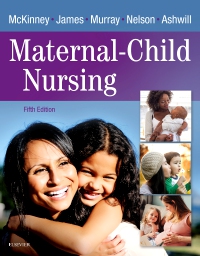

Maternal-Child Nursing - Elsevier eBook on VitalSource, 5th Edition
Elsevier eBook on VitalSource
Prepare your students to provide safe and effective maternal-child nursing care with this easy-to-read text. Perfect for accelerated maternity and pediatrics courses, Maternal-Child Nursing, 5th Edition is filled with a wealth of user-friendly features to help students quickly master essential concepts and skills. It offers completely updated content — including expanded information on the late preterm infant, fetal heart rate pattern identification, obesity in the pregnant woman and children, and enhanced coverage of the QSEN initiative. It also features an abundance of active learning tools to give students ample opportunities to practice applying their knowledge and skills.
New Edition Expected Availability: 11-29-2021

Maternal-Child Nursing - Elsevier eBook on VitalSource
-
- NEW! Completely updated content includes expanded information on the late preterm infant, fetal heart rate pattern identification, obesity in the pregnant woman and children, and the QSEN initiative.
- UPDATED! Evidence-Based Practice boxes with newly researched topics offer the most current practice guidelines to promote quality care.
- UPDATED! Online resources offer the best interactive tools to learn in the most effective way possible.
- NEW! Improved consistency between maternity and pediatric sections makes it easier to switch from one area to the other for more efficient learning.
-
- NEW! Completely updated content includes expanded information on the late preterm infant, fetal heart rate pattern identification, obesity in the pregnant woman and children, and the QSEN initiative.
- UPDATED! Evidence-Based Practice boxes with newly researched topics offer the most current practice guidelines to promote quality care.
- UPDATED! Online student and instructor resources offer the best interactive tools to teach and learn in the most effective way possible.
- Nursing care plans assist students with applying the nursing process to plan individualized care for the most common maternity and pediatric conditions.
- NEW! Improved consistency between maternity and pediatric sections makes it easier to switch from one area to the other for more efficient learning.
- Critical to Remember boxes summarize and highlight essential, need-to-know information.
- Critical Thinking Exercises allow students to apply their knowledge to realistic clinical situations.
- Communication Cues provide practical tips for effective verbal and nonverbal communication with patients and families.
- Clinical Reference sections in pediatric chapters present information relevant to each body system, including anatomy and physiology, differences in the pediatric patient, and related laboratory and diagnostic tests.
- Safety Alerts call attention to important patient safety considerations for better outcomes of nursing care.
- Glossary at the end of the book offers quick access to all key terms and definitions presented in the text.
- Want to Know boxes provide teaching guidelines such as communication guides directed at patients and families.
- Pathophysiology boxes present an illustrated overview of disorders.
- Updated drug guides summarize key medication information.
-
-
 Study Guide for Maternal-Child Nursing - Elsevier eBook on VitalSourceElsevier eBook on VitalSource
-
-
INTRODUCTION TO MATERNAL-CHILD HEALTH NURSING
1. Foundations of Maternity, Women’s Health, and Child Health Nursing
2. The Nurse’s Role in Maternity, Women’s Health, and Pediatric Nursing
3. The Childbearing and Child-Rearing Family
4. Communicating with Children and Families
5. Health Promotion for the Developing Child
6. Health Promotion for the Infant
7. Health Promotion During Early Childhood
8. Health Promotion for the School-Age Child
9. Health Promotion for the Adolescent
10. Heredity and Environmental Influences on Development
MATERNITY NURSING CARE
11. Reproductive Anatomy and Physiology
12. Conception and Prenatal Development
13. Adaptations to Pregnancy
14. Nutrition for Childbearing
15. Prenatal Diagnostic Tests
16. Giving Birth
17. Intrapartum Fetal Surveillance
18. Pain Management for Childbirth
19. Nursing Care During Obstetric Procedures
20. Postpartum Adaptations
21. The Normal Newborn: Adaptation and Assessment
22. The Normal Newborn: Nursing Care
23. Newborn Feeding
24. The Childbearing Family with Special Needs
25. Pregnancy-Related Complications
26. Concurrent Disorders During Pregnancy
27. The Woman with an Intrapartum Complication
28. The Woman with a Postpartum Complication
29. The High-Risk Newborn: Problems Related to Gestational Age and Development
30. The High-Risk Newborn: Acquired and Congenital Conditions
31. Management of Fertility and Infertility
32. Women’s Health Care
PEDIATRIC NURSING CARE
33. Physical Assessment of Children
34. Emergency Care of the Child
35. The III Child in the Hospital and Other Care Settings
36. The Child with a Chronic Condition or Terminal Illness
37. Principles and Procedures for Nursing Care of Children
38. Medication Administration and Safety for Infants and Children
39. Pain Management for Children
40. The Child with a Fluid and Electrolyte Alteration
41. The Child with an Infectious Disease
42. The Child with an Immunologic Alteration
43. The Child with a Gastrointestinal Alteration
44. The Child with a Genitourinary Alteration
45. The Child with a Respiratory Alteration
46. The Child with a Cardiovascular Alteration
47. The Child with a Hematologic Alteration
48. The Child with Cancer
49. The Child with an Alteration in Tissue Integrity
50. The Child with a Musculoskeletal Alteration
51. The Child with an Endocrine or Metabolic Alteration
52. The Child with a Neurologic Alteration
53. Psychosocial Problems in Children and Families
54. The Child with a Developmental Disability
55. The Child with a Sensory Alteration
Glossary
-
-
Ways of Reading
- The appearance of the text and page layout can be modified according to the capabilities of the reading system (font family and font size, spaces between paragraphs, sentences, words, and letters, as well as color of background and text)
- This e-publication is accessible to the full extent that the file format and types of content allow, on a specific reading device, by default, without necessarily including any additions such as textual descriptions of images or enhanced navigation
- No information about nonvisual reading is available
-
Conformance
- The publication was certified on 27-05-2026
-
Navigation
- Table of contents to all chapters of the text via links
- Page list to go to pages from the print source version
-
Rich Content
- No information is available
-
Hazards
- No information is available
-
Product Content
- No information is available
-
Legal Considerations
- No information is available
-
Additional Accessibility Information
- Page breaks included from the original print source
- For readers with color vision deficiency, use of color (e.g., in diagrams, graphics and charts, in prompts, or on buttons inviting a response) is not the sole means of graphical distinction or of conveying information
- E-publication includes basic navigation (usually less detailed than TOC-based navigation)
- Where links, controls or buttons are included in the content, the purpose or functionality of each link, control or button is apparent from the associated text alone - or where it is unclear, separate link, control or button descriptions are provided
- All (or substantially all) textual matter is arranged in a single logical reading order (including text that is visually presented as separate from the main text flow, e.g., in boxouts, captions, tables, footnotes, endnotes, citations, etc.). Non-textual content is also linked from within this logical reading order. (Purely decorative non-text content can be ignored).
- The language of the text has been specified (e.g., via the HTML or XML lang attribute) to optimise text-to-speech (and other alternative renderings), both at the whole document level and, where appropriate, for individual words, phrases or passages in a different language.
-
Ways of Reading

 as described in our