
ISBN:
9780323548410
Copyright:
2026
Publication Date:
07-11-2025
Page Count:
578
Imprint:
Elsevier
List Price:
$104.99
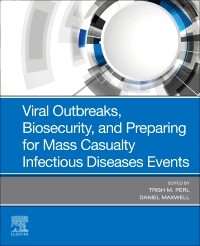
Viral Outbreaks, Biosecurity, and Preparing for Mass Casualty Infectious Diseases Events, 1st Edition
by Trish M. Perl, MD, MSc and Daniel Maxwell
Hardcover
ISBN:
9780323548410
Copyright:
2026
Publication Date:
07-11-2025
Page Count:
578
Imprint:
Elsevier
List Price:
$104.99
This item has low stock levels and may be back-ordered. We'll let you know if it is back-ordered, and you will not be charged until the item ships.
Written by authorities in infectious disease and disaster preparedness, this one-stop resource covers the relevant theoretical, historical, and pragmatic considerations of viral outbreaks and bioterrorism. It provides an expert overview of this complex area for infectious disease physicians, emergency medicine physicians, hospital administrators, and more.
-
- Explores the historical context of various agents and potential agents that could be used for bioterrorism, including anthrax, tularemia, smallpox, SARS, and more
- Discusses the lessons learned from naturally occurring outbreaks that have enhanced preparedness at individual hospitals locally, regionally, nationally, and internationally
- Provides forms, checklists, and algorithms throughout – invaluable resources for health care providers and administrators
- Consolidates today’s available information on this timely topic into a single convenient resource
-
1. Perspectives on Bioterrorism and Pandemics
2. A Brief History of Biological Warfare and Bioterrorism
3. Anthrax: Ancient Surge and Current Biothreat
4. Tularemia: A Bioterrorist Threat and Public Health Concern
5. Plague: The Yersinia pestis Infection
6. Viral Hemorrhagic Fevers (VHFs): An Archetype for Risk Management and High-Consequence Pathogens
7. Smallpox and Mpox
8. Preparing for Influenza Epidemics and Pandemics
9. Avian Influenza
10. Severe Acute Respiratory Syndrome (SARS)
11. Middle East Respiratory Syndrome (MERS)
12. SARS-CoV-2
13. The Age of Synthetic Biology: Changing Biosecurity Risks
14. Preparing for Viral Outbreaks and Bioterrorism: The Public Health Perspective
15. Prevention in Healthcare and Public Health
16. Surveillance Strategies
17. Infectious Diseases Transmission Dynamics: Modeling of Outbreaks and Interventions
18. Risks and Challenges for First Responders Managing Patients Infected With or Exposed to High-Consequence Infectious Diseases
19. Healthcare Preparedness for Infectious Diseases Mass Casualty Events, Including Bioterrorism, Viral Outbreaks, and Pandemics
20. Special Care Units
21. Diagnostics
22. Protecting the Frontline and Preventing Transmission of High-Consequence Agents and Other Pathogens With Pandemic Potential in Healthcare Settings
23. Vaccines: Science and Public Health Applications
24. Vaccines
25. Therapeutics Overview for Agents of Bioterrorism and Viral Outbreaks
26. Ethical Issues in Preparing for and Responding to Infectious Outbreaks and Bioterror Attacks
27. Strategies for Successful Communications During Health Emergencies: Insights From Journalists Turned Public Relations Experts
28. Recovery From Biological Disasters: Bioterrorism, Outbreaks of Emerging Infectious Diseases, and Pandemics
Index -
No accessibility information is available for this product.

 as described in our