ISBN:
9780323571043
Copyright:
2020
Publication Date:
03-11-2019
Page Count:
896
Imprint:
Mosby
List Price:
$107.99

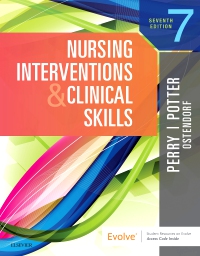
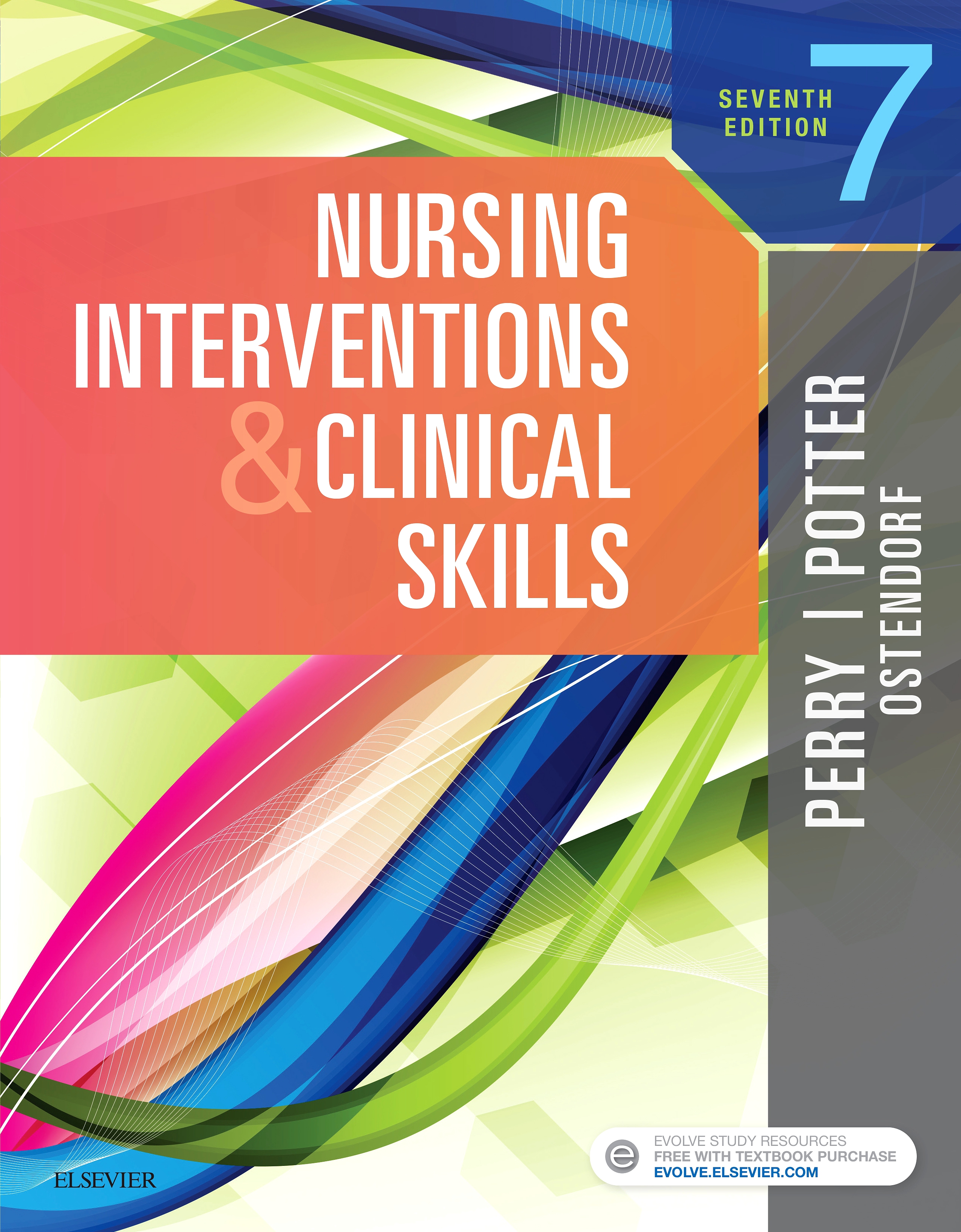
Nursing Interventions & Clinical Skills Elsevier eBook on VitalSource, 7th Edition
by Anne G. Perry, RN, MSN, EdD, FAAN, Patricia A. Potter, RN, MSN, PhD, FAAN and Wendy R. Ostendorf, RN, MS, EdD, CNE
Elsevier eBook on VitalSource
ISBN:
9780323571043
Copyright:
2020
Publication Date:
03-11-2019
Page Count:
896
Imprint:
Mosby
List Price:
$107.99
Most review copies are eBooks – how fast!
A review copy request is most likely to be fulfilled as an eBook on VitalSource rather than a print product, unless no eBook is available. eBooks become available in as little as a few hours. Print products will take between 7 and 10 days to arrive. To request a print copy, please contact us through the Evolve Support Center for further assistance or contact your Elsevier Sales Rep.
Guide your students through nursing skills! Perry, Potter, and Ostendorf’s Nursing Interventions & Clinical Skills, 7th Edition makes it easy for students to master the skills required in everyday nursing practice. Clear, step-by-step instructions cover more than 160 basic, intermediate, and advanced skills — from measuring body temperature to insertion of a peripheral intravenous device — using evidence-based concepts to improve patient safety and outcomes. A streamlined, visual approach makes the book easy to read, and an Evolve companion website enhances learning with review questions and handy checklists for each clinical skill.
-
- NEW! 2017 Infusion Nurses Society standards are included on administering IVs and on other changes in evidence-based practice.
- NEW Disaster Preparedness chapter focuses on caring for patients after biological, chemical, or radiation exposure.
- NEW! SBAR samples show how to quickly and effectively communicate a patient’s condition in terms of Situation, Background, Assessment, and Recommendation.
- NEW! Practice Reflections sections include a clinical scenario and questions, helping you reflect on clinical and simulation experiences.
- NEW! Three Master Debriefs help you develop a better understanding of the "big picture" by synthesizing skill performance with overall patient care.
-
- Coverage of more than 160 skills and interventions addresses the basic, intermediate, and advanced skills that students will use every day in practice.
- NEW! 2017 Infusion Nurses Society standards are included on administering IVs and on other changes in evidence-based practice.
- NEW Disaster Preparedness chapter focuses on caring for patients after biological, chemical, or radiation exposure.
- NEW! Three Master Debriefs help students develop a better understanding of the "big picture" by synthesizing skill performance with overall patient care.
- NEW! SBAR samples show students how to quickly and effectively communicate a patient’s condition in terms of Situation, Background, Assessment, and Recommendation.
- Delegation & Collaboration guidelines help in making decisions as to whether to delegate a skill to unlicensed assistive personnel, and indicates what key information must be shared.
- NEW! Practice Reflections sections include a clinical scenario with questions, helping students reflect on their clinical and simulation experiences.
- Unique! Using Evidence in Nursing Practice chapter provides the information needed to use evidence-based care to solve clinical problems.
- Coverage of HCAHPS (Hospital Consumer Assessment of Healthcare Providers and Systems) introduces the concept of evaluating hospitals with standardized surveys of patients’ perspectives of their care.
- Media resources include skills performance checklists on the Evolve companion website and related lessons, videos, and interactive exercises on Nursing Skills Online.
- Teach-Back step shows how to evaluate the success of patient teaching, so students can see whether the patient understands a task or topic or if additional teaching may be needed.
- Coverage of evidence-based nursing techniques includes the concept of care bundles, structured practices that improve patient safety and outcomes, in addition to the coverage of teach-back.
- Safe Patient Care Alerts highlight risks or other key information to know in performing skills, so students can plan ahead at each step of nursing care.
- Recording guidelines describe what should be reported and documented after performing skills, with Hand-off Reporting sections listing important patient care information to include in the handoff.
- Special Considerations indicate the additional risks or accommodations faced when caring for pediatric or geriatric patients, as well as patients in home care settings.
- A consistent format for nursing skills makes it easier for students to perform skills, organized by Assessment, Planning, Implementation, and Evaluation.
- NEW and updated photographs highlight changes in skills practice, ensuring that students learn safe and current patient care.
-
Unit 1: Quality and Safety in Nursing Practice
1. Using Evidence in Nursing Practice
2. Communication & Collaboration
3. Documentation and Informatics
4. Patient Safety & Quality Improvement
5. Infection Control
6. Disaster Preparedness
Unit 2: Patient Assessment Skills
7. Vital Signs
8. Health Assessment
9. Specimen Collection
10. Diagnostic Procedures
Unit 3: Basic Human Needs
11. Bathing and Personal Hygiene
12. Care of the Eye and Ear
13. Promoting Nutrition
14. Parenteral Nutrition
15. Pain Management
16. Promoting Oxygenation
Unit 4: Activity and Mobility
17. Safe Patient Handling
18. Exercise, Mobility & Immobilization Devices
Unit 5: Promoting Elimination
19. Urinary Elimination
20. Bowel Elimination
21. Ostomy Care
Unit 6: Medication Administration
22. Preparation for Safe Medication Administration
23. Nonparenteral Medications
24. Parenteral Medications
Unit 7: Dressings and Wound Care
25. Wound Care and Irrigation
26. Pressure Injury Prevention and Care
27. Dressings Bandages and Binders
Unit 8: Complex Nursing Interventions
28. Intravenous Therapy
29. Pre-Operative and Post-Operative Care
30. Emergency Measures for Life Support
Unit 9: Supportive Nursing Interventions
31. End-of-Life Care
32. Home Care Safety -
-
Ways of Reading
- The appearance of the text and page layout can be modified according to the capabilities of the reading system (font family and font size, spaces between paragraphs, sentences, words, and letters, as well as color of background and text)
- This e-publication is accessible to the full extent that the file format and types of content allow, on a specific reading device, by default, without necessarily including any additions such as textual descriptions of images or enhanced navigation
- No information about nonvisual reading is available
-
Conformance
- No information is available
-
Navigation
- Table of contents to all chapters of the text via links
- Page list to go to pages from the print source version
-
Rich Content
- No information is available
-
Hazards
- No information is available
-
Product Content
- No information is available
-
Legal Considerations
- No information is available
-
Additional Accessibility Information
- Page breaks included from the original print source
- For readers with color vision deficiency, use of color (e.g., in diagrams, graphics and charts, in prompts, or on buttons inviting a response) is not the sole means of graphical distinction or of conveying information
- E-publication includes basic navigation (usually less detailed than TOC-based navigation)
- Where links, controls or buttons are included in the content, the purpose or functionality of each link, control or button is apparent from the associated text alone - or where it is unclear, separate link, control or button descriptions are provided
- All (or substantially all) textual matter is arranged in a single logical reading order (including text that is visually presented as separate from the main text flow, e.g., in boxouts, captions, tables, footnotes, endnotes, citations, etc.). Non-textual content is also linked from within this logical reading order. (Purely decorative non-text content can be ignored).
- The language of the text has been specified (e.g., via the HTML or XML lang attribute) to optimise text-to-speech (and other alternative renderings), both at the whole document level and, where appropriate, for individual words, phrases or passages in a different language.
-
Ways of Reading

Most review copies are eBooks – how fast!
A review copy request is most likely to be fulfilled as an eBook on VitalSource rather than a print product, unless no eBook is available. eBooks become available in as little as a few hours. Print products will take between 7 and 10 days to arrive. To request a print copy, please contact us through the Evolve Support Center for further assistance or contact your Elsevier Sales Rep.

 as described in our