ISBN:
9780323596275
Copyright:
2020
Publication Date:
04-01-2019
Page Count:
784
Imprint:
Elsevier
List Price:
$89.99

Netter's Gastroenterology Elsevier eBook on VitalSource, 3rd Edition
by Martin H. Floch, MD, C.S. Pitchumoni, Neil R. Floch, Raul Rosenthal, James Scolapio and Joseph K. Lim
Elsevier eBook on VitalSource
ISBN:
9780323596275
Copyright:
2020
Publication Date:
04-01-2019
Page Count:
784
Imprint:
Elsevier
List Price:
$89.99
Most review copies are eBooks – how fast!
A review copy request is most likely to be fulfilled as an eBook on VitalSource rather than a print product, unless no eBook is available. eBooks become available in as little as a few hours. Print products will take between 7 and 10 days to arrive. To request a print copy, please contact us through the Evolve Support Center for further assistance or contact your Elsevier Sales Rep.
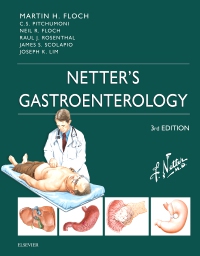
Perfect for residents, generalists, medical students, nurses, and other healthcare professionals who need a practical, working knowledge of gastroenterology, Netter's Gastroenterology, 3rd Edition, provides a concise overview highlighted by unique, memorable Netter illustrations. This superb visual resource showcases the well-known work of Frank H. Netter, MD, and his successor, Carlos Machado, MD, a physician who has created clear, full-color illustrations in the Netter tradition. Up-to-date coverage of the full range of digestive diseases—including gastroenterology, hepatology, and nutrition— keeps you current with the latest information in the field.
-
- Offers a quick and memorable summary of nearly 200 of the most commonly encountered clinical conditions, from classic to contemporary. Concise text is presented in a templated format for fast, easy access to information
- Features over 300 Netter and Netter-style images that highlight key aspects of patient presentation, pathophysiology, and relevant anatomy to provide a rich visual understanding of the most important concepts
- Includes access to 25 printable patient education brochures in the enhanced eBook version
- Provides complete guidance on all major GI diseases and conditions through sections on normal structure and function, the clinical picture, diagnosis, treatment and management, course and progress, and prevention and control
- Offers dependable clinical advice from Drs. Martin H. Floch, Neil R. Floch, Joseph K. Lim, C. S. Pitchumoni, Raul J. Rosenthal, and James S. Scolapio, as well as many world-renowned chapter contributors
- Enhanced eBook version included with purchase, which allows you to access all of the text, figures, and references from the book on a variety of devices
-
SECTION I ESOPHAGUS
1. Anatomy of the Esophagus and the Foregut
2. Congenital Anomalies of the Esophagus
3. Deglutition
4. Benign Disease of Esophagus
5. Esophageal Diverticula
6. Foreign Bodies in the Esophagus
7. Caustic Injury of the Esophagus
8. Esophageal Varicosities
9. Esophageal Rupture and Perforation
10. Eosinophilic Esophagitis
11. GERD
12. Sliding and Paraesophageal Hiatal Hernias Types 1, 2, and 3
13. Esophageal Motility Disorders
14. Neoplastic Disease of the Esophagus
SECTION II STOMACH AND DUODENUM
15. Anatomy of the Stomach and Duodenum
16. Gastric Secretion
17. Factors Influencing Gastric Activity
18. Role of the Stomach in Digestion
19. Gastric Acid Secretion Tests: Hydrochloric Acid and Gastrin
20. Effect of Drugs on Gastric Function
21. Upper Gastrointestinal Endoscopy: Esophagogastroduodenoscopy
22. Coated Tongue, Halitosis, and Thrush
23. Aerophagia and Eructation
24. Motility of the Stomach
25. Gastroparesis and Gastric Motility Disorders
26. Pyloric Obstruction and the Effects of Vomiting
27. Nausea and Vomiting
28. Hypertrophic Pyloric Stenosis
29. Diverticula of the Stomach and Gastrointestinal Prolapse
30. Diverticula of the Duodenum
31. Dyspepsia, Functional Dyspepsia, and Nonulcer Dyspepsia
32. Helicobacter pylori Infection
33. Gastritis: General, Erosive and Acute
34. Peptic Ulcer Disease
35. Upper Gastrointestinal Bleeding
36. Therapeutic Gastrointestinal Endoscopy
37. Benign Tumors of the Stomach and GISTs
38. Gastrintestinal Lymphoma and Mucosa-Associated Lymphoid Tissue
39. Cancers of the Stomach
40. Tumors of the Duodenum
41. Principles of Gastric Surgery
42. Postgastrectomy Complications: Partial Gastrectomy
43. Effects of Total Gastrectomy
SECTION III Abdominal wall
44. Anatomy of the Abdominal Wall and Inguinal Region
45. Peritoneum and Related Diseases
46. Mesenteric Ischemia and other Vascular Lesions
47. Alimentary Tract Obstruction and Intestinal Injuries
48. Abdominal wall and abdominal cavity hernias
49. Abdominal Cavity Access: Open Laparotomy, Laparoscopy, and Robotic access
SECTION IV SMALL INTESTINE
50. Anatomy of the Small Intestine
51. Secretory, Digestive, and Absorptive Functions of the Small Intestine
52. Gastrointestinal Hormones and Neurotransmitters
53. Imaging of the Small Intestine
54. Visceral Reflexes
55. Congenital Abnormalities of the Small Intestine
56. Meckel Diverticulum
57. Diverticula of the Small Intestine
58. Motility and Dysmotility of the Small Intestine
59. Obstruction and Ileus of the Small Intestine
60. Chronic Intestinal Pseudo-Obstruction
61. Irritable Bowel Syndrome and Functional Gastrointestinal Disorders
62. Evaluation of the Small Bowel
63. Lactose, Fructose, and Sucrose Intolerance
64. Diarrhea
65. Celiac Disease and Malabsorption
66. Whipple Disease
67. Small Intestinal Bacterial Overgrowth
68. Short Bowel Syndrome
69. Food Allergy
70. Eosinophilic Gastroenteritis
71. Intussusception of the Small Intestine
72. Benign Tumors of the Small Intestine
73. Malignant Tumors of the Small Intestine
74. Carcinoid Syndrome and Neuroendocrine Tumors
75. Ileostomy, Colostomy, and Gastroenteric Stromas
SECTION V COLON, RECTUM, AND ANUS
76. Anatomy of the Colon, Rectum, and Anus
77. Secretory, Digestive, and Absorptive Functions of the Colon and Colonic Flora
78. Probiotics, Prebiotics and the Microbiota
79. Anoscopy, Sigmoidoscopy, and Colonoscopy
80. Laparoscopy and Laparotomy
81. Stool Examination
82. Intestinal Bleeding
83. Motility and Dysmotility of the Large Intestine
84. Normal Defecation and Pathophysiology of Fecal Incontinence
85. Constipation
86. Effects of Drugs on the Colon
87. Megacolon and Hirschsprung Disease
88. Volvulus, Sigmoid and Cecum
89. Diseases of the Appendix: Inflammation, Mucocele, and Tumors
90. Diverticulosis
91. Ulcerative Colitis
92. Ileostomy and Colostomy
93. Pouch Anal Anastomosis and Pouchitis
94. Differentiating Features of Ulcerative Colitis and Crohn’s Disease
95. Crohn’s Disease and Complications and Surgical Therapy
96. Perianal Disease in Crohn’s Disease
97. Drug Therapy for Inflammatory Bowel Disease
98. Microscopic Colitis (Lymphocytic or Collagenous Colitis)
99. Neoplasms of the Large Bowel: Colonic Polyps and Colon Cancer
100. Familial Adenomatous Polyposis and Polyposis Syndromes
101. Rectal Cancer
102. Hemorrhoids
103. Rectal Prolapse and Procidentia
104. Anal Fissure, Pruritus Ani, Papillitis, and Cryptitis
105. Anorectal Abscess and Fistula
106. Lymphogranuloma Venereum and Sexually Transmitted Proctitis
107. Fecal Incontinence
SECTION VI INFECTIOUS AND PARASITIC DISEASES OF THE ALIMENTARY TRACT
108. Human Immunodeficiency Virus and the Gastrointestinal Tract
109. Infectious Esophagitis
110. Typhoid Fever (Paratyphoid Fever, Enteric Fever)
111. Food Poisoning and Enteric Pathogens
112. Clostridium difficile and Antibiotic-Associated Diarrhea
113. Gastrointestinal Tuberculosis
114. Abdominal Actinomycosis
115. Amebiasis
116. Giardia lamblia and Other Protozoan Infections
117. Intestinal Helminths: Trichuriasis
118. Enterobiasis
119. Ascariasis
120. Strongyloidiasis
121. Hookworm Disease (Necatoriasis and Ancylostomiasis)
Tapeworms (Cestodes)
122. Other Helminth Infections: Trichinella spiralis and Flukes
SECTION VII PANCREAS
123. Development and Anatomy of the Pancreas
124. Pancreatic Ducts and Exocrine and Endocrine Organs
125. Pancreatic Physiology
126. Cystic Fibrosis
127. Acute Pancreatitis
128. Chronic Pancreatitis
129. Pancreatic Cancer
130. Cystic Neoplasms of the Pancreas
131. Pancreatic Neuroendocrine Tumors (Islet Cell Tumors)
SECTION VIII GALLBLADDER AND BILE DUCTS
132. Anatomy and Function of the Gallbladder
133. Gallstone
134. Acute Cholecystiti
135. Cholecystitis: Complications
136. Chronic Cholecystitis
137. Choledocholithiasis and Cholangitis
138. Sphincter of Oddi Dysfunction
139. Preiampullary Cancer
140. Gallbladder Carcinoma
141. Cholangiocarcinoma
SECTION IX LIVER
142. Anatomy of the Liver
143. Liver Function Tests
144. Prothrombin Formation
145. Bilirubin and Bile Acid Metabolism
146. Clinical Manifestations of Cirrhosis
147. Physical Diagnosis of Liver Disease
148. Causes of Portal Hypertension
149. Ascites
150. Hepatic Encephalopathy
151. Hepatorenal Syndrome
152. Variceal Bleeding
153. Transjugular Intrahepatic Portosystemic Shunt
154. Liver Biopsy
155. Hepatic Necrosis
156. Cirrhosis
157. Imaging Studies of the Liver
158. Alcoholic Liver Disease
159. Nonalcoholic Fatty Liver Disease and Seatohepatitis
160. Extrahepatic Biliary Obstruction
161. Primary Biliary Cirrhosis
162. Primary Sclerosing Cholangitis
163. Autoimmune Hepatitis
164. Acute Viral Hepatitis (Hepatitis A, D, E)
165. Hepatitis B
166. Hepatitis C
167. Hepatitis Caused by Other Viruses
168. Hepatotoxicity
169. Disorders of Bilirubin Transport
170. a-Antitrypsin Deficiency
171. Hereditary Hemochromatosis
172. Liver Disease in Pregnancy
173. Benign Liver Tumors
174. Granulomatous Liver Diseases
175. Wilson Disease
176. Hepatocellular Carcinoma
177. Liver Transplantation
178. Other Infections of the Liver: Amebiasis, Spirochetes, Actinomycosis, Echicoccosis, Schistosomiasis
179. Vascular Disorders of the Liver
180. Bile Duct Cancer
181. Metastatic Cancer
182. Hepatic Trauma
SECTION X NUTRITION AND GASTROINTESTINAL DISEASE
183. Dietary and Nutritional Assessment
184. Macronutrients and Energy
185. Micronutrient and Vitamin Deficiency
186. Enteral Nutrition
187. Dietary Fiber
188. Parenteral Nutrition
189. Malnutrition
190. Obesity and Its Treatment
191. Gastrointestinal Diseases Related to Nutrition -
-
Ways of Reading
- The appearance of the text and page layout can be modified according to the capabilities of the reading system (font family and font size, spaces between paragraphs, sentences, words, and letters, as well as color of background and text)
- This e-publication is accessible to the full extent that the file format and types of content allow, on a specific reading device, by default, without necessarily including any additions such as textual descriptions of images or enhanced navigation
- No information about nonvisual reading is available
-
Conformance
- No information is available
-
Navigation
- Table of contents to all chapters of the text via links
- Page list to go to pages from the print source version
-
Rich Content
- No information is available
-
Hazards
- No information is available
-
Product Content
- No information is available
-
Legal Considerations
- No information is available
-
Additional Accessibility Information
- Page breaks included from the original print source
- For readers with color vision deficiency, use of color (e.g., in diagrams, graphics and charts, in prompts, or on buttons inviting a response) is not the sole means of graphical distinction or of conveying information
- E-publication includes basic navigation (usually less detailed than TOC-based navigation)
- Where links, controls or buttons are included in the content, the purpose or functionality of each link, control or button is apparent from the associated text alone - or where it is unclear, separate link, control or button descriptions are provided
- All (or substantially all) textual matter is arranged in a single logical reading order (including text that is visually presented as separate from the main text flow, e.g., in boxouts, captions, tables, footnotes, endnotes, citations, etc.). Non-textual content is also linked from within this logical reading order. (Purely decorative non-text content can be ignored).
- The language of the text has been specified (e.g., via the HTML or XML lang attribute) to optimise text-to-speech (and other alternative renderings), both at the whole document level and, where appropriate, for individual words, phrases or passages in a different language.
-
Ways of Reading
Most review copies are eBooks – how fast!
A review copy request is most likely to be fulfilled as an eBook on VitalSource rather than a print product, unless no eBook is available. eBooks become available in as little as a few hours. Print products will take between 7 and 10 days to arrive. To request a print copy, please contact us through the Evolve Support Center for further assistance or contact your Elsevier Sales Rep.

 as described in our