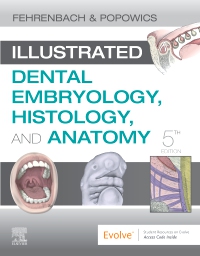

Illustrated Dental Embryology, Histology, and Anatomy Elsevier eBook on VitalSource, 5th Edition
Elsevier eBook on VitalSource
Now $69.99
Get a clear picture of oral biology and the formation and study of dental structures. Illustrated Dental Embryology, Histology, & Anatomy, 5th Edition is the ideal introduction to one of the most foundational areas in the dental professions – understanding the development, cellular makeup, and physical anatomy of the head and neck regions. Written in a clear, reader-friendly style, this text makes it easy for you to understand both basic science and clinical applications - putting the content into the context of everyday dental practice. New for the fifth edition is evidence-based research on the dental placode, nerve core region, bleeding difficulties, silver diamine fluoride, and primary dentition occlusion. Plus, high-quality color renderings and clinical histographs and photomicrographs throughout the book, truly brings the material to life.
New Edition Expected Availability: 03-03-2025

Illustrated Dental Embryology, Histology, and Anatomy Elsevier eBook on VitalSource
-
- NEW! Evidence-based research thoroughly discusses the dental placode, nerve core region, bleeding difficulties, silver diamine fluoride, and primary dentition occlusion
- NEW! Photomicrographs, histographs, and full-color illustrations throughout text helps bring the material to life
- NEW! The latest periodontal insights include biologic width, gingival biotype, gingival crevicular fluid quantitative proteomics, clinical attachment level, AAP disease classification, and reactive oxygen species therapy
- NEW! Expanded coverage of key topics includes figures on tongue formation, developmental disturbances, root morphology, and TMJ cone beam CT
-
- NEW! Nora AI - an AI-powered learning assistant exclusive to Elsevier ebooks on VitalSource's Bookshelf® platform - offers built-in AI learning support that provides personalized answers based on content from the Elsevier ebook
- UPDATED! Test Bank with cognitive leveling and mapping to the dental assisting and dental hygiene test blueprints
- UPDATED! User-friendly pronunciation guide of terms ensures students learn the correct way to pronounce dental terminology
- Comprehensive coverage includes all the content needed for an introduction to the developmental, histological, and anatomical foundations of oral health
- Hundreds of full-color anatomical illustrations and clinical and microscopic photographs accompany text descriptions of anatomy and biology
- Clinical Considerations boxes relate abstract-seeming biological concepts to everyday clinical practice
- Key terms open each chapter, accompanied by phonetic pronunciations, and are highlighted within the text, and ag glossary provides a quick and handy review and research tool
- Expert authors provide guidance and expertise related to advanced dental content
-
UNIT I: OROFACIAL STRUCTURES
1. Face and Neck Regions
2. Oral Cavity and Pharynx
UNIT II: DENTAL EMBRYOLOGY
3. Prenatal Development
4. Face and Neck Development
5. Orofacial Development
6. Tooth Development and Eruption
UNIT III: DENTAL HISTOLOGY
7. Cells
8. Basic Tissue
9. Oral Mucosa
10. Gingival and Dentogingival Junctional Tissues
11. Head and Neck Structures
12. Enamel
13. Dentin and Pulp
14. Periodontium: Cementum, Alveolar Bone, Periodontal Ligament
UNIT IV: DENTAL ANATOMY
15. Overview of Dentitions
16. Permanent Anterior Teeth
17. Permanent Posterior Teeth
18. Primary Dentition
19. Temporomandibular Joint
20. Occlusion
Bibliography
Glossary
Appendix
A: Anatomical Position
B: Units of Measure
C: Tooth Measurements
D: Tooth Development -
-
Ways of Reading
- The appearance of the text and page layout can be modified according to the capabilities of the reading system (font family and font size, spaces between paragraphs, sentences, words, and letters, as well as color of background and text)
- This e-publication is accessible to the full extent that the file format and types of content allow, on a specific reading device, by default, without necessarily including any additions such as textual descriptions of images or enhanced navigation
- No information about nonvisual reading is available
-
Conformance
- No information is available
-
Navigation
- Table of contents to all chapters of the text via links
- Page list to go to pages from the print source version
-
Rich Content
- No information is available
-
Hazards
- No information is available
-
Product Content
- No information is available
-
Legal Considerations
- No information is available
-
Additional Accessibility Information
- Page breaks included from the original print source
- For readers with color vision deficiency, use of color (e.g., in diagrams, graphics and charts, in prompts, or on buttons inviting a response) is not the sole means of graphical distinction or of conveying information
- E-publication includes basic navigation (usually less detailed than TOC-based navigation)
- Where links, controls or buttons are included in the content, the purpose or functionality of each link, control or button is apparent from the associated text alone - or where it is unclear, separate link, control or button descriptions are provided
- All (or substantially all) textual matter is arranged in a single logical reading order (including text that is visually presented as separate from the main text flow, e.g., in boxouts, captions, tables, footnotes, endnotes, citations, etc.). Non-textual content is also linked from within this logical reading order. (Purely decorative non-text content can be ignored).
- The language of the text has been specified (e.g., via the HTML or XML lang attribute) to optimise text-to-speech (and other alternative renderings), both at the whole document level and, where appropriate, for individual words, phrases or passages in a different language.
-
Ways of Reading



 as described in our