ISBN:
9780323642460
Copyright:
2012
Publication Date:
04-04-2018
Page Count:
704
Imprint:
Saunders
List Price:
$121.99

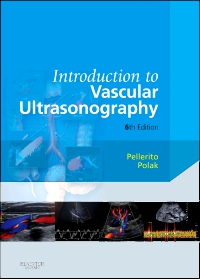
Introduction to Vascular Ultrasonography - Elsevier eBook on VitalSource, 6th Edition
by John Pellerito, MD and Joseph F. Polak, MD, MPH
Elsevier eBook on VitalSource
ISBN:
9780323642460
Copyright:
2012
Publication Date:
04-04-2018
Page Count:
704
Imprint:
Saunders
List Price:
$121.99
Was
$121.99
Now $109.79
Or $0.00 with a valid access code
Now in its 6th edition, Introduction to Vascular Ultrasonography, by Drs. John Pellerito and Joseph Polak, provides an easily accessible, concise overview of arterial and venous ultrasound. A new co-editor and new contributors have updated this classic with cutting-edge diagnostic procedures as well as new chapters on evaluating organ transplants, screening for vascular disease, correlative imaging, and more. High-quality images, videos, and online access make this an ideal introduction to this complex and rapidly evolving technique.
New Edition Expected Availability: 11-13-2019

Introduction to Vascular Ultrasonography Elsevier eBook on VitalSource
Elsevier eBook on VitalSource
ISBN: 9780323625234
-
- Stay current with trending topics through new chapters on evaluation of organ transplants, screening for vascular disease, correlative imaging, and accreditation and the vascular lab.
- Experience clinical scenarios with vivid clarity through new color ultrasound images.
- Watch vascular ultrasound videos and access the complete contents online at www.expertconsult.com.
- Benefit from the fresh perspective and insight of a new co-editor, Dr. Joseph Polak.
- Improve your understanding of the correlation of imaging results with treatment goals in venous and arterial disease.
-
- Find information quickly with sections organized by clinical rationale, anatomy, examination technique, findings, and interpretation.
- Get a thorough review of ultrasound vascular diagnosis, including peripheral veins and arteries, carotid and vertebral arteries, abdominal vessels, and transcranial Doppler.
- Quickly reference numerous tables for examination protocols, normal values, diagnostic parameters, and ultrasound findings for selected conditions.
- Visualize important techniques with hundreds of lavish line drawings and clinical ultrasound examples.
-
- Hemodynamic considerations in peripheral vascular and cerebrovascular disease
- Physics and instrumentation in Doppler and B-mode ultrasonography
- Basic concepts of doppler frequency spectrum analysis and ultrasound blood flow imaging
- Vascular applications of ultrasound contrast agents
- The role of ultrasound in the management of cerebrovascular disease
- Normal cerbrovascular anatomy and collateral pathways
- Normal findings and technical aspects of carotid sonography
- Ultrasound assessment of carotid plaque
- Ultrasound assessment of carotid stenosis
- Carotid occlusion, unusual carotid pathology and tricky carotid cases
- Ultrasound assessment of the vertebral arteries
- Ultrasound assessment of the intracranial arteries
- Arterial anatomy of the extremities
- Nonimaging physiologic tests for assessment of lower extremity arterial disease
- Assessment of upper extremity arterial occlusive arterial disease
- Ultrasound evaluation before and after hemodialysis access
- Ultrasound assessment of lower extremity arteries
- Ultrasound assessment during and after carotid peripheral intervention
- Ultrasound in the assessment and management of arterial emergencies
- Risk factors and the role of ultrasound in the management of extremity venous disease
- Extremity venous anatomy and technique for ultrasound examination
- Ultrasound diagnosis of lower extremity venous thrombosis
- Controversies in venous ultrasound
- Ultrasound diagnosis of venous insufficiency
- Nonvascular pathology encountered during venous sonography
- Anatomy and normal doppler signatures of abdominal vessels
- Ultrasound assessment of the abdominal aorta
- Ultrasound imaging assessment following endovascular aortic aneurysm repair
- Ultrasound assessment of the splanchnic (mesenteric) arteries
- Ultrasound assessment of the hepatic vasculature
- Ultrasound assessment of native renal vessels
- Duplex ultrasound evaluation of the uterus and ovaries
- Duplex ultrasound evaluation of the male genitalia
- Evaluation of Organ Transplants
- Screening for Vascular Disease
- Correlative imaging
- Accreditation and the vascular lab
SECTION 1: BASICS
SECTION 2: CEREBRAL VESSELS
SECTION 3: EXTREMITY ARTERIES
SECTION 4: EXTREMITY VEINS
SECTION 5: ABDOMEN AND PELVIS
-
-
Ways of Reading
- The appearance of the text and page layout can be modified according to the capabilities of the reading system (font family and font size, spaces between paragraphs, sentences, words, and letters, as well as color of background and text)
- This e-publication is accessible to the full extent that the file format and types of content allow, on a specific reading device, by default, without necessarily including any additions such as textual descriptions of images or enhanced navigation
- No information about nonvisual reading is available
-
Conformance
- No information is available
-
Navigation
- Table of contents to all chapters of the text via links
- Page list to go to pages from the print source version
-
Rich Content
- No information is available
-
Hazards
- No information is available
-
Product Content
- No information is available
-
Legal Considerations
- No information is available
-
Additional Accessibility Information
- Page breaks included from the original print source
- For readers with color vision deficiency, use of color (e.g., in diagrams, graphics and charts, in prompts, or on buttons inviting a response) is not the sole means of graphical distinction or of conveying information
- E-publication includes basic navigation (usually less detailed than TOC-based navigation)
- Where links, controls or buttons are included in the content, the purpose or functionality of each link, control or button is apparent from the associated text alone - or where it is unclear, separate link, control or button descriptions are provided
- All (or substantially all) textual matter is arranged in a single logical reading order (including text that is visually presented as separate from the main text flow, e.g., in boxouts, captions, tables, footnotes, endnotes, citations, etc.). Non-textual content is also linked from within this logical reading order. (Purely decorative non-text content can be ignored).
- The language of the text has been specified (e.g., via the HTML or XML lang attribute) to optimise text-to-speech (and other alternative renderings), both at the whole document level and, where appropriate, for individual words, phrases or passages in a different language.
-
Ways of Reading
Was
$121.99
Now $109.79
Or $0.00 with a valid access code

 as described in our