
ISBN:
9780323826518
Copyright:
2023
Publication Date:
11-25-2022
Page Count:
546
Imprint:
Mosby
List Price:
$83.99

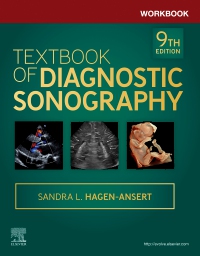
Workbook for Textbook of Diagnostic Sonography Elsevier eBook on VitalSource, 9th Edition
by Sandra L. Hagen-Ansert, MS, RDMS, RDCS, FASE, FSDMS
Elsevier eBook on VitalSource
ISBN:
9780323826518
Copyright:
2023
Publication Date:
11-25-2022
Page Count:
546
Imprint:
Mosby
List Price:
$83.99
Was
$83.99
Now $73.91
Or $0.00 with a valid access code
**2025 Textbook and Academic Authors Association (TAA) McGuffey Longevity Award Winner**
Reinforce your understanding of Hagen-Ansert’s Textbook of Diagnostic Sonography, 9th Edition with this practical workbook! With chapters corresponding to the textbook, this study guide provides exercises allowing you to review, practice, and apply sonography concepts. Case studies offer opportunities to apply your knowledge to the clinical setting. Like the text, this edition of the workbook includes updated images and scans, in addition to content that reflects the newest curriculum standards. It’s a useful review and an excellent preparation tool for national board examinations in diagnostic sonography!
-
-
 Textbook of Diagnostic Sonography - Elsevier eBook on VitalSourceElsevier eBook on VitalSource
 -
 Textbook of Diagnostic SonographyHardcover
-
-
- Review questions are presented in a variety of formats, including multiple-choice, matching, short answer, fill-in-the-blank, and labeling, with answers at the back of the book
- Exercises in each chapter provide review and practice with terminology, anatomy, physiology, laboratory values, sonographic anatomy and technique, and pathology
- Anatomy labeling activities test your ability to recognize anatomic structures in sonographic images
- Review of key terms in each chapter allows you to test your knowledge of the terminology used in the textbook
- Case studies include images from the textbook, testing your skills at identifying key anatomy and pathology and in interpreting sonographic findings
- Content reviews include multiple-choice questions to test your knowledge of the four main content areas covered on ARDMS board exams: general sonography, pediatric, cardiovascular anatomy, and obstetrics and gynecology
-
- NEW! Updated content keeps pace with the 9th edition of Textbook of Diagnostic Sonography, reflecting the newest curriculum standards and preparing you for the national board examinations
- NEW! Updated images and scans reflect the latest advances in the field and help you prepare for boards and for clinicals
-
1. Foundations of Sonography
2. Essentials of Patient Care for the Sonographer
3. Ergonomics and Musculoskeletal Issues in Sonography
4. Anatomic and Physiologic Relationships Within the Abdominal-Pelvic Cavity
5. Comparative Sectional Anatomy of the Abdominal-Pelvic Cavity
6. Basic Ultrasound Imaging: Techniques, Terminology, and Tips
7. Imaging and Doppler Artifacts
8. The Vascular System
9. The Liver
10. The Gallbladder and the Biliary System
11. The Spleen
12. The Pancreas
13. The Gastrointestinal Tract
14. The Peritoneal Cavity and Abdominal Wall
15. The Urinary System
16. The Retroperitoneum
17. Abdominal Applications of Ultrasound Contrast Agents
18. Ultrasound-Guided Interventional Techniques
19. Emergent Abdominal Ultrasound Procedures
20. Sonographic Techniques in the Transplant Patients
21. The Breast
22. The Thyroid and Parathyroid Glands
23. The Scrotum
24. The Musculoskeletal System
25. Neonatal and Pediatric Abdomen
26. Neonatal and Pediatric Adrenal and Urinary System
27. Neonatal Echoencephalography
28. The Neonatal Hip
29. Neonatal and Infant Spine
30. Anatomic and Physiologic Relationships Within the Thoracic Cavity
31. Hemodynamics
32. Echocardiography: Techniques, Terminology, and Tips
33. Introduction to Clinical Echocardiography: Left Side Valvular Heart Disease
34. Introduction to Clinical Echocardiography: Pericardial Disease, Cardiomyopathies, and Tumors -
-
Ways of Reading
- The appearance of the text and page layout can be modified according to the capabilities of the reading system (font family and font size, spaces between paragraphs, sentences, words, and letters, as well as color of background and text)
- This e-publication is accessible to the full extent that the file format and types of content allow, on a specific reading device, by default, without necessarily including any additions such as textual descriptions of images or enhanced navigation
- No information about nonvisual reading is available
-
Conformance
- For detailed accessibility information, see Elsevier's website at https://www.elsevier.com/about/accessibility
- For queries regarding accessibility information, contact [email protected]
- The publication was certified on 03-11-2025
-
Navigation
- Table of contents to all chapters of the text via links
-
Rich Content
- No information is available
-
Hazards
- No information is available
-
Product Content
- No information is available
-
Legal Considerations
- No information is available
-
Additional Accessibility Information
- For readers with color vision deficiency, use of color (e.g., in diagrams, graphics and charts, in prompts, or on buttons inviting a response) is not the sole means of graphical distinction or of conveying information
- E-publication includes basic navigation (usually less detailed than TOC-based navigation)
- Where links, controls or buttons are included in the content, the purpose or functionality of each link, control or button is apparent from the associated text alone - or where it is unclear, separate link, control or button descriptions are provided
- All (or substantially all) textual matter is arranged in a single logical reading order (including text that is visually presented as separate from the main text flow, e.g., in boxouts, captions, tables, footnotes, endnotes, citations, etc.). Non-textual content is also linked from within this logical reading order. (Purely decorative non-text content can be ignored).
- The language of the text has been specified (e.g., via the HTML or XML lang attribute) to optimise text-to-speech (and other alternative renderings), both at the whole document level and, where appropriate, for individual words, phrases or passages in a different language.
-
Ways of Reading
Was
$83.99
Now $73.91
Or $0.00 with a valid access code

 as described in our