ISBN:
9780323826914
Copyright:
2022
Publication Date:
08-26-2021
Page Count:
200
Imprint:
Elsevier
List Price:
$79.99
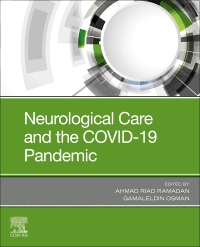
Neurological Care and the COVID-19 Pandemic, 1st Edition
by Ahmad Riad Ramadan, MD and Gamaleldin Osman, MD
Paperback
ISBN:
9780323826914
Copyright:
2022
Publication Date:
08-26-2021
Page Count:
200
Imprint:
Elsevier
List Price:
$79.99
Most review copies are eBooks – how fast!
A review copy request is most likely to be fulfilled as an eBook on VitalSource rather than a print product, unless no eBook is available. eBooks become available in as little as a few hours. Print products will take between 7 and 10 days to arrive. To request a print copy, please contact us through the Evolve Support Center for further assistance or contact your Elsevier Sales Rep.
This item has low stock levels and may be back-ordered. We'll let you know if it is back-ordered, and you will not be charged until the item ships.
Offering a comprehensive review of the neuropathology of SARS-CoV-2, Neurological Care and the COVID-19 Pandemic provides up-to-date coverage of the wide array of the pathogen’s neurological symptoms and complications. Drs. Ahmad Riad Ramadan and Gamaledin Osman discuss the neuropathology of SARS-CoV-2, its neurological manifestations, and the impact the pandemic has had on the care of patients with pre-existing neurological conditions. The authors also offer an overview of emerging treatments and vaccines, as well as ways healthcare systems have reorganized in order to respond to the pandemic.
-
- Offers a thorough discussion of the impact the virus has had on the care of patients with neurological ailments, accompanied by recommendations on how to care for these patients
- Covers the impact of COVID-19 on patients with cerebrovascular diseases, seizures, demyelinating diseases, neuromuscular disorders, movement disorders, headache disorders, cognitive disorders, and neuro-oncological disorders
- Includes a detailed case study of how one healthcare system hit hard by COVID-19 successfully transformed itself to respond to the challenges imposed by the pandemic
- Consolidates today’s available information on this timely topic into a single, convenient resource
-
1. Fears and hopes
2. Neuropathogenesis of SARS-CoV-2 infection
3. Neurological presentations of COVID-19
4. COVID-19 and cerebrovascular diseases
5. COVID-19 and seizures
6. COVID-19 and autoimmune demyelinating diseases
7. COVID-19 and neuromuscular disorders
8. Pediatric neurology and the COVID-19 pandemic
9. Neuro-oncologic care during the COVID-19 pandemic
10. COVID-19 infection: Impaired olfaction, movement disorders, encephalopathy, and neuropsychiatric manifestations
11. COVID-19 and headache disorders
12. Treatment approach, pharmacological agents and vaccines
13. Response of healthcare systems to the pandemic
Appendix: Medications -
No accessibility information is available for this product.
Most review copies are eBooks – how fast!
A review copy request is most likely to be fulfilled as an eBook on VitalSource rather than a print product, unless no eBook is available. eBooks become available in as little as a few hours. Print products will take between 7 and 10 days to arrive. To request a print copy, please contact us through the Evolve Support Center for further assistance or contact your Elsevier Sales Rep.
This item has low stock levels and may be back-ordered. We'll let you know if it is back-ordered, and you will not be charged until the item ships.

 as described in our