ISBN:
9780323831550
Copyright:
2024
Publication Date:
02-26-2024
Page Count:
416
Imprint:
Elsevier
List Price:
$71.99
Pediatric Physical Examination, 4th Edition
by Karen G. Duderstadt, PhD, RN, CPNP, FAAN and Victoria F. Keeton, PhD, RN, CPNP-PC, CNS
Paperback
ISBN:
9780323831550
Copyright:
2024
Publication Date:
02-26-2024
Page Count:
416
Imprint:
Elsevier
List Price:
$71.99
In Stock
Most review copies are eBooks – how fast!
A review copy request is most likely to be fulfilled as an eBook on VitalSource rather than a print product, unless no eBook is available. eBooks become available in as little as a few hours. Print products will take between 7 and 10 days to arrive. To request a print copy, please contact us through the Evolve Support Center for further assistance or contact your Elsevier Sales Rep.
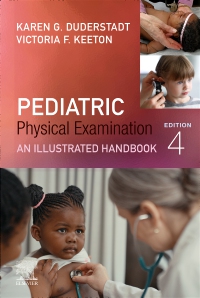
Known for its accuracy, consistency, and portability, Pediatric Physical Examination: An Illustrated Handbook, 4th Edition teaches the unique range of skills that Nurse Practitioners and primary care providers need to assess children of all ages. Spiral-bound for quick reference in clinical settings, this photo-rich, step-by-step guide to physical examination for providers prepares students to expertly examine children from birth through adolescence. Body system chapters begin with fetal development and take students through the key developmental stages of childhood. This edition features new sections with Telehealth Tips and Considerations for Special Populations in many chapters, as well as expanded coverage of maltreatment, mental health, and social disparities of health.

-
- NEW! Telehealth Tips section added to chapters reflects the greatly expanded use of telehealth visits in clinical practice
- NEW! Information on maltreatment, mental and behavioral health, and social determinants of health explored throughout the chapters
- NEW! Considerations for special needs populations added to most chapters
- NEW! Guidance on use of screen time for early childhood and advice for families
-
- NEW! Telehealth Tips section added to chapters reflects the greatly expanded use of telehealth visits in clinical practice
- NEW! Information on maltreatment, mental and behavioral health, and social determinants of health explored throughout the chapters
- NEW! Considerations for special needs populations added to most chapters
- NEW! Guidance on use of screen time for early childhood and advice for families
- Expert guidance for the pediatric physical exam employs the "quiet-to-active" approach, starting with the listening parts of the physical exam and moving on to the hands-on components, the physical assessment approach that yields the best results in the pediatric age group
- Quick-reference features include special tables/boxes, such as Information Gathering, Conditions, Pediatric Pearls, Red Flags, Interprofessional Collaboration Notes, Evidence-Based Practice, and EHR Documentation
- Easy-to-use layout provides quick access to concise guidance for the pediatric physical exam
- Richly illustrated, full-color format facilitates readability and learning with more than 300 photos and line drawings of assessment techniques and common assessment findings
- Inclusive and ethnically diverse illustrations better represent the diverse populations pediatric health care providers work with every day
-
-

-
 Pediatric Physical Examination - Elsevier EBook on VitalSourceElsevier eBook on VitalSource
-
-
UNIT I Pediatric General Assessment
1. Approach to Care and Assessment of Children and Adolescents
2. Assessment of Growth and Vital Signs
3. Developmental, Emotional, and Behavioral Surveillance and Screening
4. Comprehensive Information Gathering
5. Environmental Health History
6. Newborn Assessment
UNIT II System-Specific Assessment
7. Skin Assessment
8. Heart and Vascular Assessment
9. Chest and Respiratory Assessment
10. Eyes
11. Ears
12. Nose, Mouth, and Throat
13. Neck and Lymphatic System Assessment
14. Abdomen and Rectum
15. Penis, Testicles, and Scrotum
16. Breast
17. Vulva, Vagina, and Internal Pelvic Assessment
18. Musculoskeletal Assessment
19. Head and Neurological System -
No accessibility information is available for this product.
In Stock
Most review copies are eBooks – how fast!
A review copy request is most likely to be fulfilled as an eBook on VitalSource rather than a print product, unless no eBook is available. eBooks become available in as little as a few hours. Print products will take between 7 and 10 days to arrive. To request a print copy, please contact us through the Evolve Support Center for further assistance or contact your Elsevier Sales Rep.

 as described in our