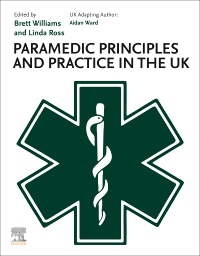

Paramedic Principles and Practice in the UK - Elsevier E-Book on VitalSource, 1st Edition
Elsevier eBook on VitalSource
The volume takes a practical approach, with case histories covering a broad range of clinical presentations and treatments, all incorporating a patient-centric perspective that acknowledges the longer patient journey.
This must-have textbook will not only arm readers with technical knowledge and expertise, but also with the non-technical principles of the profession, developing future paramedics who are able to provide a safe and effective management plan in the out-of-hospital environment.
-
- Aligned to UK paramedicine curricula
- More than 40 detailed case studies covering essential pathologies most commonly seen by UK paramedics, as well as less typical scenarios
- Evidence-based clinical decision-making models to support paramedics in practice
- Essential physiological concepts to help readers bridge the gap from principles to practice
- Focus on the wellbeing of both the patient and the paramedic
- Useful appendices including medications commonly encountered in paramedic settings
-
1. Introduction
SECTION 2: Foundation Knowledge
2. Perfusion
3. The Autonomic Response
4. The Inflammatory Response
5. Pharmacodynamics and Pharmacokinetics
SECTION 3: Foundation Concepts
6. Paramedic education
7. Evidence-Based Practice in Paramedicine
8. Developing a Philosophy of Practice
9. The Clinical Reasoning Process
SECTION 4:Communication and Non-technical Skills
10. Interpersonal Communication and Patient-Focused Care
SECTION 5: The UK Healthcare System
11. The Paramedic Role in Healthcare
12. Characteristics of Ambulance Patients
SECTION 6:Patient and Paramedic Safety
13. Patient Safety and Paramedicine
14. Paramedic Health and Wellbeing
SECTION 7: Legal, Ethical and Professional Considerations
15. Legal and Ethical Considerations in Clinical Decision-Making
SECTION 8: The Paramedic Clinical Approach
16. The Structured Clinical Approach
17. The Patient-centred Interview
SECTION 9: The Paramedic Approach to the Patient with a Respiratory Condition
18. Airway Obstruction
19. Asthma
20. Acute Pulmonary Oedema
21. Chronic Obstructive Pulmonary Disease
22. Pneumothorax
23. Pleural effusion
24. Pulmonary Embolism
SECTION 10: The Paramedic Approach to the Patient with a Cardiac Condition
25. Chest Pain
26. Arrhythmias
27. Cardiac Arrest
SECTION 11: The Paramedic Approach to the Patient with a Medical Condition
28. Haematological presentations
29. Hypoglycaemia and Hyperglycaemia
30. Stroke
31. Overdose
32. Anaphylaxis
33. Seizures
34. Pain
35. Acute Abdominal Pain
36. Sepsis
37. Bleeding From the Gastrointestinal and Urinary Tract
38. Renal Colic
39. The Patient on Out-of-Hospital Dialysis
SECTION 12: The Paramedic Approach to the Trauma Patient
40. Head Injuries
41. Chest Injuries
42. Burns
43. Musculoskeletal Injuries
44. Traumatic Spinal Injuries
45. Lower Back Pain
46. Major Incidents
SECTION 13: The Paramedic Approach to the Patient with an Environmental Condition
47. Hypothermia and Hyperthermia
48. Decompression Injuries
49. Tropical Medicine
SECTION 14: The Paramedic Approach to Complex Cases: Specific Challenges to Paramedic Reasoning and Management
50. The Socially Isolated Patient
51. The Dying Patient
52. Older Patients
53. Cultural Competence
54. Family Violence and Safeguarding
SECTION 15: The Paramedic Approach to the Patient Displaying Changes in Behaviour: Mental Health and Mental Illness
55. Mental Health Conditions
56. De-Escalation Strategies
SECTION 16: The Paramedic Approach to Obstetric (Maternity), Neonatal and Paediatric Patients
57. Imminent Birth
58. Neonatal Resuscitation
59. Paediatric Patients -
-
Ways of Reading
- The appearance of the text and page layout can be modified according to the capabilities of the reading system (font family and font size, spaces between paragraphs, sentences, words, and letters, as well as color of background and text)
- This e-publication is accessible to the full extent that the file format and types of content allow, on a specific reading device, by default, without necessarily including any additions such as textual descriptions of images or enhanced navigation
- No information about nonvisual reading is available
-
Conformance
- No information is available
-
Navigation
- Table of contents to all chapters of the text via links
- Page list to go to pages from the print source version
-
Rich Content
- No information is available
-
Hazards
- No information is available
-
Product Content
- No information is available
-
Legal Considerations
- No information is available
-
Additional Accessibility Information
- Content is enhanced with ARIA roles to optimize organization and facilitate navigation
- Page breaks included from the original print source
- For readers with color vision deficiency, use of color (e.g., in diagrams, graphics and charts, in prompts, or on buttons inviting a response) is not the sole means of graphical distinction or of conveying information
- E-publication includes basic navigation (usually less detailed than TOC-based navigation)
- Where links, controls or buttons are included in the content, the purpose or functionality of each link, control or button is apparent from the associated text alone - or where it is unclear, separate link, control or button descriptions are provided
- All (or substantially all) textual matter is arranged in a single logical reading order (including text that is visually presented as separate from the main text flow, e.g., in boxouts, captions, tables, footnotes, endnotes, citations, etc.). Non-textual content is also linked from within this logical reading order. (Purely decorative non-text content can be ignored).
- The language of the text has been specified (e.g., via the HTML or XML lang attribute) to optimise text-to-speech (and other alternative renderings), both at the whole document level and, where appropriate, for individual words, phrases or passages in a different language.
-
Ways of Reading


 as described in our