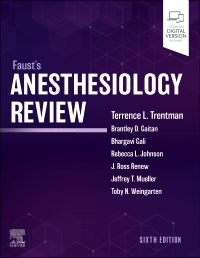
Faust's Anesthesiology Review, 6th Edition
Paperback
-
- Provides in-depth, yet succinct clinical synopses of all topic areas found on the ABA/ASA exam, with the perfect amount of information to ensure exam success
- Contains five new chapters: Principles of Preoperative Evaluation; Anesthesia for Patients who are Lactating; Peripheral Nerve Blocks of the Anterior Trunk; Sustainability in Anesthesiology and the Operating Room; and Anesthesia During a Pandemic
- Covers the core knowledge needed to succeed in today’s anesthesiology practice, including awake craniotomy, non-OR anesthesia (NORA), neuromodulation, using arterial pressure waveform to derive cardiac output, enhanced recovery (ERAS) pathways, chemical dependency in anesthesia personnel, lung transplantation, anesthesia for robotic surgery, and more
- Includes boxes, tables, charts, and graphs throughout to provide visual guidance and summarize critical information
- Features concise chapters for efficient review and effective recall, making this an ideal study tool for certification, recertification, or as a refresher for anesthesiology practice
- An eBook version is included with purchase. The eBook allows you to access all of the text, figures and references, with the ability to search, customize your content, make notes and highlights, and have content read aloud
-
Section 1: Operating Room, Equipment, and Monitoring
1. Medical Gas Supply
2. Electricity in the Operating Room
3. Operating Room Fires
4. Vaporizers
5. Carbon-Dioxide Absorption
6. Carbon-Dioxide Retention and Capnography
7. Tracheal Tubes
8. Complications of Tracheal Intubation
9. Disconnect Monitors
10. Pulse Oximetry
11. Hemodynamic Monitoring
12. Monitoring Integrity of the Neuromuscular Junction
13. Evoked Potential Monitoring and ElectromyographySection 2: Physiology
14. Oxygen Transport
15. Blood Gas Temperature Correction
16. Central Regulation of Ventilation
17. Physiologic Effects of Hypercarbia and Hyopcarbia
18. Factors Affecting Pulmonary Compliance and Airway Resistance
19. Pulmonary Ventilation and Perfusion
20. Pulmonary Function Test Interpretation
21. Chronic Obstructive Pulmonary Disease and Restrictive Lung Disease
22. Measurement and Implications of the Qs/Qt
23. Cardiac Cycle: Control and Synchronicity
24. Physiologic Determinants of Cardiac Output
25. Myocardial Oxygen Supply and Demand
26. Tachyarrhythmias
27. Bradyarrhythmias
28. The Autonomic Nervous System
29. The Sympathetic Nervous System: Anatomy and Receptor Pharmacology
30. Factors Affecting Cerebral Blood Flow
31. Physiology of Neuromuscular Transmission
32. Renal Physiology
33. Renal Function Tests
34. Acid-Base Status
35. Electrolyte Abnormalities: Potassium, Sodium, Calcium and Magnesium
36. Hepatic Physiology and Preoperative Evaluation
37. Mechanisms of Hepatic Drug Metabolism and ExcretionSection 3: Pharmacology
38. Molecular, Cellular, and Neural Mechanisms of General Anesthesia
39. Factors That Affect Anesthetic Gas Uptake
40. Minimum Alveolar Concentration
41. The Effect of Intracardiac Shunts on Inhalation Induction
42. Inhalation Anesthetic Agents
43. Nitrous Oxide
44. Cardiovascular Effects of the Inhalation Agents
45. Effects of the Inhalation Agents on the Central Nervous System
46. Hepatic Effects of the Inhalation Agents
47. Propofol
48. Etomidate
49. Ketamine
50. Opioid Pharmacology
51. Succinylcholine
52. Nondepolarizing Neuromuscular-Blocking Agents
53. Nonrelaxant Side Effects of Neuromuscular-Blocking Agents
54. Antagonism of Neuromuscular Block
55. Pharmacology of Atropine, Scopolamine, and Glycopyrrolate
56. Benzodiazepines
57. Dexmedetomidline
58. Inotropes
59. Vasopressors
60. Vasodilators
61. Nitroglycerin
62. Beta-adrenergic Receptor-Blocking Agents
63. Calcium Channel Blockers
64. Renin-Angiotensin Receptor Inhibition
65. Bronchodilators
66. AntiemeticsSection 4: Colloids and Blood Products
67. Albumin, Hetastarch and Pentastarch
68. Type, Screen, and Crossmatch of Red Blood Cells
69. Red Blood Cell and Platelet Transfusion
70. Massive Transfusion
71. Hemolytic Transfusion Reactions
72. Nonhemolytic Transfusion Reactions
73. Blood Product ConservationSection 5: Preoperative and Postoperative
74. Principles of Preoperative Evaluation
75. Principles of Preoperative Evaluation of the Patient with Cardiac Disease for Noncardiac Operations
76. Tobacco Use in Surgical Patients
77. Obstructive Sleep Apnea
78. Postoperative Nausea and Vomiting
79. Anesthesia for Patients Who are Lactating
80. Acute and Chronic Alcoholism and Anesthesia
81. The Evaluation and Management of Prolonged Emergence from Anesthesia
82. Delirium in the Postanesthesia Care UnitSection 6A: Specialty Anesthesia: Regional Anesthesia
83. Local Anesthetic Agents: Mechanism of Action and Pharmacology
84. Toxicity of Local Anesthetic Agents
85. Regional Analgesia Adjuvants, Liposomal Bupivacaine
86. Multimodal Analgesia
87. Needle Blocks of the Eye
88. Spinal Cord Anatomy and Blood Supply
89. Spinal Anesthesia
90. Epidural Anesthesia
91. Combined Spinal-Epidural Blockade
92. Neuraxial Anesthesia and Anticoagulation
93. Brachial Plexus Anatomy
94. Upper Extremity Blocks
95. Peripheral Nerve Blocks of the Posterior Trunk
96. Peripheral Nerve Blocks of the Anterior Trunk
97. Lower Extremity Peripheral Nerve Blocks
98. Peripheral Nerve Blocks at the Ankle
99. Perioperative Antifibrinolytic Medication Use
100. Basics of Ultrasound-Guided Regional AnesthesiaSection 6B: Specialty Anesthesia: Neuroanesthesia
101. Cerebral Protection
102. Increased Intracranial Pressure
103. Functional Neurosurgery
104. Anesthesia for Awake Intracranial Surgery
105. Cerebral Circulation
106. Management of Cerebral Aneurysms
107. Anesthesia for Pituitary Surgery
108. Anesthesia for the Sitting Position
109. Physiology and Treatment of Venous Air Embolism
110. Perioperative Implications of Caring for Patients with Epilepsy
111. Effects of Anesthetic Agents and Sedation Medications on Electroencephalograms
112. Carotid Endarterectomy
113. Management of Acute Spinal Cord Injury
114. Anesthesia for Adult Complex Spine SurgerySection 6C: Specialty Anesthesia: Cardiac
115. Coronary Circulation and the Myocardial Conduction System
116. Transesophageal Echocardiography: Anatomic Considerations
117. Detection and Treatment of Perioperative Acute Coronary Syndromes
118. Heart Failure: Classification, Compensation, and Treatment
119. Right Heart Failure, Tricuspid and Pulmonary Valve Pathology
120. Management of End-Stage Heart Failure: Heart Transplantion Versus Ventricular Assist Device
121. Coronary Stents
122. Cardiopulmonary Bypass
123. Evaluation of the Coagulation System
124. Anticoagulation and Reversal for Cardiopulmonary Bypass
125. Aortic Stenosis
126. Mitral Regurgitation
127. Percutaneous Approaches to Valvular Disease: Transcatheter Aortic Valve Replacement (TAVR) and Transcatheter Mitral Valve Repair (TMVR)
128. Pacemakers
129. Implantable Cardioverter-Defibrillators
130. Intra-Aortic Balloon Pump
131. Extracorporeal Membrane OxygenationSection 6D: Specialty Anesthesia: Thoracic
132. Intraoperative Bronchospasm: Etiology and Treatment
133. Anesthesia for Bronchoscopy
134. Double-Lumen Tracheal Tubes
135. One-Lung Ventilation and Methods of Improving Oxygenation
136. Bronchopleural Fistula
137. High-Frequency Ventilation: Physics, Physiology, and Clinical Applications
138. Thoracotomy Pain Management
139. Lung TransplantationSection 7: Multispecialty Anesthesia: General Urologic ENT
140. Thermoregulation and Perioperative Hypothermia
141. The Role of the Anesthesia Provider in Wound Infection
142. Anesthesia in the Patient with Extreme Obesity
143. Weight Loss Procedures
144. Complications of Transurethral Resection of the Prostate
145. Extracorporeal Shock Wave Lithotripsy
146. Anatomy of the Larynx
147. Anesthesia for Laryngeal Surgery
148. Management of the Difficult Airway
149. Enhanced Recovery Pathways (ERPS)Section 8: Anesthesia for Unique Situations
150. Anesthesia During a Pandemic
151. Monitored Anesthesia Care
152. Anesthesia for Patients Undergoing Magnetic Resonance Imaging
153. Anesthesia for Robotic Surgery
154. Anesthesia for Electroconvulsive Therapy
155. Myasthenia Gravis and Lambert-Eaton Myasthenic Syndrome
156. Anesthesia for Endoscopic Procedures
157. Anesthesia Outside of the Operating Room
158. Anesthesia for Interventional reuroRadiology
159. Anesthesia for Patients with Diabetes Mellitus
160. Anesthesia for Thyroid Surgery
161. Anesthesia for Patients with Carcinoid Syndrome
162. Anesthesia for Patients with Hepatocellular Disease
163. Anesthesia for the Patient Undergoing Liver Transplantation
164. Autonomic DysreflexiaSection 9: Obstetric Anesthesia
165. Maternal Physiologic Changes in Pregnancy
166. Fetal Assessment and Intrapartum Fetal Monitoring
167. Analgesia for Labor
168. Opioid Dependence and the Parturient
169. Preterm Labor: Tocolytics and Anesthetic Management
170. Hypertensive Disorders of Pregnancy
171. Anesthesia for Cesarean Delivery
172. Non-Obstetric Surgery in Pregnancy
173. Anesthesia for Fetal Surgery
174. Peripartum Hemorrhage
175. Anesthesia for Tubal Ligation
176. Maternal Diabetes: Neonatal EffectsSection 10: Pediatric Anesthesia
177. Impact of Anesthesia on Neural Development
178. Anesthetic Risks Associated with Prematurity
179. Meconium Aspiration and Meconium Aspiration Syndrome
180. Risks of General Anesthesia and Sedation Drugs in a Pediatric Patient
181. Neonatal Cardiovascular Physiology
182. Differences Between the Infant and Adult Airway
183. Fluid Management in Infants
184. Neuromuscular Blocking Agents in Infants
185. Congenital Diaphragmatic Hernia
186. Congenital Pediatric Airway Problems
187. Congenital Heart Disease: Congestive Heart Failure
188. Other Neonatal Emergencies: Tracheoesophageal Fistula and Omphalocele
189. Neonatal Resuscitation
190. Pyloric Stenosis
191. Pediatric Breathing Circuits
192. Croup Versus Epiglottis
193. Sickle Cell Anemia: Anesthetic Implications
194. Anesthetic Considerations for the Patient with Down Syndrome
195. Pediatric Neuromuscular Disorders
196. Anesthesia for Patients with Myotonic Dystrophy
197. Regional Anesthesia and Pain Relief in ChildrenSection 11: Pain Medicine
198. Perioperative Management of the Opioid-Tolerant Patient
199. Patient-Controlled Analgesia
200. Neuraxial Opioids
201. Complex Regional Pain Syndrome
202. Postoperative Headache
203. Treatment of Cancer-Related Pain
204. Postherpetic Neuralgia
205. Common Interventions for Low Back Pain
206. Stellate Ganglion Block
207. Lumbar Sympathetic Blockade
208. Celiac Plexus Block
209. Neuromodulation Techniques in Pain MedicineSection 12: Critical Care Medicine
210. Hyperbaric Oxygen Therapy
211. Perioperative Management of Blood Glucose
212. Acute Respiratory Distress Syndrome
213. Pulmonary Hypertension
214. Management of Stroke
215. Acute Kidney Injury
216. Sepsis and Septic Shock
217. Anesthesia for Burn-Injured PatientsSection 13: Risk Management
218. Medical Ethics
219. Medicolegal Principles: Informed Consent
220. Medicolegal Principles: Medical Negligence
221. Anesthesia Quality Registries
222. Depth of Anesthesia
223. Patient Safety and Quality Management
224. Perioperative Pulmonary Aspiration
225. Eye and Dental Complications
226. Intraoperative Patient Positioning and Positioning Complications
227. Malignant Hyperthermia
228. Anaphylactic and Anaphylactoid Reactions
229. Central Line SafetySection 14: Practice Management
230. American Society of Anesthesiologists Evidence-Based Practice Parameters
231. Value Based Payment Models
232. Perioperative Surgical Home
233. Licensure, Credentialing, and Privileging
234. Board Certification and Maintenance of Certification
235. Professional Liability Insurance
236. Anesthesia Information Management Systems
237. Medical Coding and Payment Systems
238. Chemical Dependence in Anesthesia Personnel
239. Sustainability in Anesthesiology and the Operating Room -
No accessibility information is available for this product.

 as described in our