ISBN:
9780323882156
Copyright:
2025
Publication Date:
03-05-2024
Page Count:
400
Imprint:
Elsevier
List Price:
$94.99

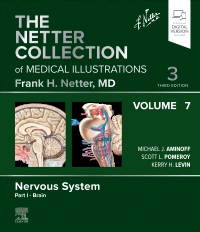
The Netter Collection of Medical Illustrations: Nervous System, Volume 7, Part I - Brain - Elsevier eBook on VitalSource, 3rd Edition
by Michael J. Aminoff, MD, DSc, FRCP, Scott Pomeroy, MD, PhD and Kerry H. Levin, MD
Elsevier eBook on VitalSource
ISBN:
9780323882156
Copyright:
2025
Publication Date:
03-05-2024
Page Count:
400
Imprint:
Elsevier
List Price:
$94.99
Most review copies are eBooks – how fast!
A review copy request is most likely to be fulfilled as an eBook on VitalSource rather than a print product, unless no eBook is available. eBooks become available in as little as a few hours. Print products will take between 7 and 10 days to arrive. To request a print copy, please contact us through the Evolve Support Center for further assistance or contact your Elsevier Sales Rep.
Offering a concise, highly visual approach to the basic science and clinical pathology of the nervous system, this updated volume in The Netter Collection of Medical Illustrations (the CIBA "Green Books") contains unparalleled didactic illustrations reflecting the latest medical knowledge. Revised by Drs. Michael J. Aminoff, Scott L. Pomeroy, and Kerry H. Levin, Brain, Part 1 of the Nervous System, Volume 7, integrates core concepts of anatomy, physiology, and other basic sciences with common clinical correlates across health, medical, and surgical disciplines. Classic Netter art, updated and new illustrations, and modern imaging continue to bring medical concepts to life and make this timeless work an essential resource for students, clinicians, and educators.
-
- Provides a highly visual guide to this complex organ, from basic neurodevelopment, neuroanatomy, neurophysiology, and cognition to a full range of disorders, including epilepsy, disorders of consciousness and sleep, movement disorders, stroke, multiple sclerosis, neurologic infections, neuro-oncology, headaches, and brain trauma
- Offers expanded coverage of timely topics like acute flaccid paralysis; neurological complications of COVID-19, ependymomas, genetics of epilepsy, and more
- Provides a concise overview of complex information by seamlessly integrating anatomical and physiological concepts using practical clinical scenarios
- Shares the experience and knowledge of Drs. Michael J. Aminoff, Scott L. Pomeroy, and Kerry H. Levin, with content overseen by experts at Harvard, UCSF, and other leading neurology centers
- Compiles Dr. Frank H. Netter’s master medical artistry—an aesthetic tribute and source of inspiration for medical professionals for over half a century—along with new art in the Netter tradition for each of the major body systems, making this volume a powerful and memorable tool for building foundational knowledge and educating patients or staff
- NEW! An eBook version is included with purchase. The eBook allows you to access all of the text, figures, and references, with the ability to search, make notes and highlights, and have content read aloud
-
SECTION 1. NORMAL AND ABNORMAL DEVELOPMENT
1.1 Embryo at 18 Days
1.2 Embryo at 20 to 24 Days
1.3 Central Nervous System at 28 Days
1.4 Central Nervous System at 36 Days
1.5 Defective Neural Tube Formation
1.6 Defective Neural Tube Formation (Continued)
1.7 Spinal Dysraphism
1.8 Spinal Dysraphism (Continued)
1.9 Fetal Brain Growth in the First Trimester
1.10 Craniosynostosis
1.11 Extracranial Hemorrhage and Skull Fractures in the Newborn
1.12 Intracranial Hemorrhage in the Newborn
1.13 External Development of the Brain in the Second and Third Trimesters
1.14 Mature Brain Ventricles
1.15 Hydrocephalus
1.16 Surgical Treatment of Hydrocephalus
1.17 Cerebral Palsy
1.18 Establishing Cellular Diversity in the Embryonic Brain and Spinal Cord
1.19 Generation of Neuronal Diversity in the Spinal Cord and Hindbrain
1.20 Circuit Formation in the Spinal Cord
1.21 Sheath and Satellite Cell Formation
1.22 Development of Myelination and Axon Ensheathment
1.23 Brachial Plexus and/or Cervical Nerve Root Injuries at Birth
1.24 Morphogenesis and Regional Differentiation of the Forebrain
1.25 Neurogenesis and Cell Migration in the Developing Neocortex
1.26 Neuronal Proliferation and Migration Disorders
1.27 Developmental Dyslexia
1.28 Autism Spectrum Disorders
1.29 Rett Syndrome
1.30 Rett Syndrome (Continued)
SECTION 2. CEREBRAL CORTEX AND NEUROCOGNITIVE DISORDERS
2.1 Surfaces of Cerebrum: Superolateral Surface
2.2 Surfaces of Cerebrum: Medial Surface
2.3 Surfaces of Cerebrum: Inferior Surface
2.4 Cerebral Cortex: Function and Association Pathways
2.5 Major Cortical Association Bundles
2.6 Corticocortical and Subcorticocortical Projection Circuits
2.7 Corpus Callosum
2.8 Rhinencephalon and Limbic System
2.9 Hippocampus
2.10 Fornix
2.11 Amygdala
2.12 Forebrain Regions Associated With Hypothalamus
2.13 Thalamocortical Radiations
2.14 Neuronal Structure and Synapses
2.15 Chemical Synaptic Transmission
2.16 Summation of Excitation and Inhibition
2.17 Types of Neurons in Cerebral Cortex
2.18 Astrocytes
2.19 Testing for Defects of Higher Cortical Function
2.20 Memory Circuits
2.21 Amnesia
2.22 Dominant Hemisphere Language Dysfunction
2.23 Nondominant Hemisphere Higher Cortical Dysfunction
2.24 Alzheimer Disease: Pathology
2.25 Alzheimer Disease: Distribution of Pathology
2.26 Alzheimer Disease: Clinical Manifestations, Progressive Phases
2.27 Frontotemporal Dementia
2.28 Dementia with Lewy Bodies
2.29 Vascular Dementia
2.30 Treatable Dementias
2.31 Normal-Pressure Hydrocephalus
SECTION 3. EPILEPSY
3.1 Electroencephalography
3.2 Focal (Partial) Seizures
3.3 Generalized Tonic-Clonic Seizures
3.4 Absence Seizures
3.5 Epilepsy Syndromes
3.6 Neonatal Seizures
3.7 Status Epilepticus
3.8 Causes of Seizures
3.9 Neurobiology of Epilepsy: Ion channels
3.10 Neurobiology of Epilepsy: Synaptic Receptors
3.11 Neurobiology of Epilepsy: Antiepileptic Drug Targets
3.12 Treatment of Epilepsy: Preoperative Evaluation
3.13 Treatment of Epilepsy: Resective Surgery
SECTION 4. PSYCHIATRY
4.1 Limbic System
4.2 Major Depressive Disorder
4.3 Postpartum Depression
4.4 Bipolar Disorder
4.5 Bipolar Disorder (Continued)
4.6 Generalized Anxiety Disorder
4.7 Social Anxiety Disorder
4.8 Panic Disorder
4.9 Posttraumatic Stress Disorder
4.10 Obsessive-Compulsive Disorder
4.11 Somatization
4.12 Conversion Disorder
4.13 Schizophrenia
4.14 Alcohol Use Disorder
4.15 Treatment for Alcohol Use Disorder
4.16 Alcohol Withdrawal
4.17 Opioid Use Disorders: Brain Substrates of Addictive Behaviors
4.18 Opioid Use Disorders: Overdose Reversal
4.19 Opioid Withdrawal
4.20 Borderline Personality Disorder
4.21 Antisocial Personality Disorder
4.22 Intimate Partner Violence
4.23 Abuse in Later Life
4.24 Delirium and Acute Personality Changes
4.25 Delirium and Acute Personality Changes (Continued)
4.26 Insomnia
4.27 Pediatrics: Depressive Disorders
4.28 Pediatrics: Anxiety Disorders
4.29 Pediatrics: Disruptive Behavior Disorders
4.30 Pediatrics: Attention-Deficit/Hyperactivity Disorders
4.31 Pediatrics: Eating and Feeding Disorders
4.32 Child Abuse: Fractures in Abused Children
4.33 Child Abuse: Staging of Injuries and Injury Patterns
SECTION 5. HYPOTHALAMUS, PITUITARY, SLEEP, AND THALAMUS
5.1 Anatomic Relationships of the Hypothalamus
5.2 Development and Developmental Disorders of the Hypothalamus
5.3 Blood Supply of the Hypothalamus and Pituitary Gland
5.4 General Topography of the Hypothalamus
5.5 Overview of Hypothalamic Nuclei
5.6 Hypothalamic Control of the Pituitary Gland
5.7 Hypothalamic Control of the Autonomic Nervous System
5.8 Olfactory Inputs to the Hypothalamus
5.9 Visual Inputs to the Hypothalamus
5.10 Somatosensory Inputs to the Hypothalamus
5.11 Taste and Other Visceral Sensory Inputs to the Hypothalamus
5.12 Limbic and Cortical Inputs to the Hypothalamus
5.13 Overview of Hypothalamic Function and Dysfunction
5.14 Regulation of Water Balance
5.15 Temperature Regulation
5.16 Fever: Cytokines and Prostaglandins Cause the Sickness Response
5.17 Fever: Hypothalamic Responses During Inflammation Modulate Immune Response
5.18 Regulation of Food Intake, Body Weight, and Metabolism
5.19 Stress Response
5.20 Hypothalamic Regulation of Cardiovascular Function
5.21 Hypothalamic Regulation of Sleep
5.22 Narcolepsy: A Hypothalamic Sleep Disorder
5.23 Sleep-Disordered Breathing
5.24 Parasomnias
5.25 Divisions of the Pituitary Gland and Its Relationships to the Hypothalamus
5.26 Posterior Pituitary Gland
5.27 Anatomic Relationships of the Pituitary Gland
5.28 Effects of Pituitary Mass Lesions on the Visual Apparatus
5.29 Anterior Pituitary Hormone Deficiencies
5.30 Severe Anterior Pituitary Hormone Deficiencies (Panhypopituitarism)
5.31 Postpartum Pituitary Infarction (Sheehan Syndrome)
5.32 Pituitary Apoplexy
5.33 Thalamic Anatomy and Pathology
5.34 Thalamic Anatomy and Pathology (Continued)
SECTION 6. DISORDERS OF CONSCIOUSNESS (COMA)
6.1 Coma
6.2 Disorders of Consciousness
6.3 Emergency Management: Full Outline of Unresponsiveness Score (FOUR)
6.4 Emergency Management: Prognosis in Coma Related to Severe Head Injuries
6.5 Differential Diagnosis of Coma
6.6 Hypoxic-Ischemic Brain Damage
6.7 Vegetative State, Minimally Conscious State, and Unresponsive Wakefulness Syndrome
6.8 Brain Death or Death by Neurologic Criteria
6.9 Ventilatory Patterns and the Apnea Test
SECTION 7. BASAL GANGLIA AND MOVEMENT DISORDERS
7.1 Basal Nuclei (Ganglia)
7.2 Basal Ganglia and Related Structures
7.3 Schematic and Cross Section of Basal Ganglia
7.4 Parkinsonism: Early Manifestations
7.5 Parkinsonism: Successive Clinical Stages
7.6 Neuropathology of Parkinson Disease
7.7 Progressive Supranuclear Palsy
7.8 Corticobasal Degeneration
7.9 Parkinsonism: Hypothesized Role of Dopamine
7.10 Surgical Management of Movement Disorders
7.11 Hyperkinetic Movement Disorder: Idiopathic Torsion Dystonia
7.12 Hyperkinetic Movement Disorder: Cervical Dystonia
7.12 Chorea/Ballism
7.13 Tremor
7.14 Tics and Tourette Syndrome
7.15 Myoclonus
7.17 Wilson Disease
7.18 Psychogenic Movement Disorders
7.19 Cerebral Palsy
SECTION 8. CEREBELLUM AND ATAXIA
8.1 Cerebellum and the Fourth Ventricle
8.2 Cerebellum Gross Anatomy
8.3 Cerebellar Peduncles
8.4 Cerebellar Cortex and Nuclei: Neuronal Elements
8.5 Cerebellar Cortex: Neuronal Elements
8.6 Cerebellar Cortical and Corticonuclear Circuitry: Cerebellar Neuronal Circuitry
8.7 Cerebellar Cortical and Corticonuclear Circuitry: Circuit Diagram of Afferent Connections
8.8 Cerebellum Subdivisions and Afferent Pathways
8.9 Cerebellum Subdivisions and Afferent Pathways: Spinocerebellar Pathways
8.10 Cerebellar Efferent Pathways
8.11 Cerebellovestibular Pathways
8.12 Cerebellum Modular Organization
8.13 Cerebrocerebellar Connections
8.14 Cerebellar Motor Examination
8.15 Cerebellar Cognitive Affective Syndrome
8.16 Cerebellar Disorders: Differential Diagnosis I
8.17 Gait Disorders: Differential Diagnosis II
8.18 Gait Disorders: Differential Diagnosis III
8.19 Friedreich Ataxia
8.20 Friedreich Ataxia: Cardiac Abnormalities and GAA Expansion Mutation
SECTION 9. CEREBROVASCULAR CIRCULATION AND STROKE
Overview and Approach to Stroke Patient
9.1 Arteries to Brain: Schema
9.2 Arteries to Brain and Meninges
9.3 Temporal and Infratemporal Fossae
9.4 Territories of the Cerebral Arteries
9.5 Arteries of Brain: Lateral and Medial Views
9.6 Arteries of Brain: Frontal View and Section
9.7 Types of Stroke
9.8 Temporal Profile of Transient Ischemic Attack (TIA) and Completed Infarction
9.9 Clinical Evaluation and Treatment of Stroke
9.10 Clinical Evaluation and Treatment of Stroke (Continued)
9.11 Uncommon Etiologic Mechanisms of Stroke
Anterior Circulation Ischemia
9.12 Common Sites of Cerebrovascular Occlusive Disease
9.13 Other Etiologies of Carotid Artery Disease
9.14 Clinical Manifestations of Carotid Artery Disease
9.15 Occlusion of Middle and Anterior Cerebral Arteries
9.16 Diagnosis of Internal Carotid Disease
9.17 Diagnosis of Carotid Artery Disease
9.18 Carotid Endarterectomy
9.19 Endovascular ICA Angioplasty and Stenting Using a Protective Device
Vertebral Basilar System Disorders
9.20 Arterial Distribution to the Brain: Basal View
9.21 Arteries of Posterior Cranial Fossa
9.22 Clinical Manifestations of Vertebrobasilar Territory Ischemia
9.23 Intracranial Occlusion of Vertebral Artery
9.24 Occlusion of Basilar Artery and Branches
9.25 Occlusion of Top-of-the-Basilar and Posterior Cerebral Arteries
Brain Emboli
9.26 Cardiac Sources of Brain Emboli
9.27 Uncommon Cardiac Mechanisms in Stroke
Lacunar Stroke
9.28 Lacunar Infarction
9.29 Risk Factors for Cardiovascular Disease
Other
9.30 Hypertensive Encephalopathy
9.31 Hypoxia
Coagulopathies
9.32 Role of Platelets in Arterial Thrombosis
9.33 Inherited Thrombophilias
9.34 Antiphospholipid Antibody Syndrome
Venous Sinus Thrombosis
9.35 Meninges and Superficial Cerebral Veins
9.36 Intracranial Venous Sinuses
9.37 Diagnosis of Venous Sinus Thrombosis
Intracerebral Hemorrhage
9.38 Pathogenesis and Types
9.39 Clinical Manifestations of Intracerebral Hemorrhage Related to Site
9.40 Vascular Malformations
Intracranial Aneurysms and Subarachnoid Hemorrhage
9.41 Distribution and Clinical Manifestations of Congenital Aneurysm Rupture
9.42 Giant Congenital Aneurysms
9.43 Ophthalmologic Manifestations of Cerebral Aneurysms
9.44 Approach to Internal Carotid Aneurysms
9.45 Flow Diversion Stent for Treatment of Unruptured Intracranial Aneurysm
Pediatrics
9.46 Pediatric Cerebrovascular Disease
Rehabilitation
9.47 Introduction and Initial Stroke Rehabilitation
9.48 Aphasia Rehabilitation
9.49 Other Rehabilitative Issues: Gait Training, Upper Limb Function, Locked-in Syndrome
9.50 Other Rehabilitative Issues: Dysphagia
SECTION 10. MULTIPLE SCLEROSIS AND OTHER CENTRAL NERVOUS SYSTEM AUTOIMMUNE DISORDERS
Multiple Sclerosis
10.1 Overview
10.2 Clinical Manifestations
10.3 Diagnosis: Typical MRI Findings—Brain
10.4 Diagnosis: Typical MRI Findings—Spinal Cord
10.5 Diagnosis: Visual Evoked Potential and Spinal Fluid Analysis
10.6 Pathophysiology
10.7 Pathophysiology (Continued)
10.8 Relapses: Steps 1 to 5
10.9 Relapses: Step 6
10.10 Relapses: Steps 7 to 8
10.11 Relapses: Consequences
10.12 Enigma of Progressive Multiple Sclerosis
10.13 Pathology
10.14 Treatment
Neuroimmunologic Syndromes
10.15 Neuromyelitis Optica, Acute Disseminated Encephalomyelitis, and Acute Hemorrhagic Leukoencephalitis—Radiologic Findings
10.16 Neuromyelitis Optica, Acute Disseminated Encephalomyelitis, and Acute Hemorrhagic Leukoencephalitis—Histopathologic Findings
10.17 Introduction to Autoimmune Neurologic Syndromes
10.18 Stiff-Person Syndrome Spectrum Disorder
10.19 Autoimmune and Paraneoplastic Neurologic Syndromes
10.20 Autoimmune and Paraneoplastic Neurologic Syndromes (Continued)
10.21 Autoimmune Neurologic Syndromes: Central and Peripheral Nervous System Manifestations
10.22 Autoimmune Neurologic Syndromes: Central and Peripheral Nervous System Manifestations (Continued)
SECTION 11. INFECTIONS OF THE NERVOUS SYSTEM
11.1 Bacterial Meningitis I
11.2 Bacterial Meningitis II
11.3 Brain Abscess
11.4 Parameningeal Infections
11.5 Infections in the Immunocompromised Host: Progressive Multifocal Leukoencephalopathy and Nocardiosis
11.6 Infections in the Immunocompromised Host: Listeriosis and Toxoplasmosis
11.7 Neurocysticercosis
11.8 Spirochetal Infections: Neurosyphilis
11.9 Spirochetal Infections: Lyme Disease
11.10 Tuberculosis of Brain and Spine
11.11 Tetanus
11.12 Aseptic Meningitis and Select Arthropod-Borne Virus Infections
11.13 Human Immunodeficiency Virus: Primary Infection of the Nervous System
11.14 Human Immunodeficiency Virus: Life Cycle and Antiretroviral Medications
11.15 Poliomyelitis
11.16 Acute Flaccid Paralysis
11.17 Herpes Zoster
11.18 Herpes Simplex Virus Encephalitis and Rabies
11.19 Parasitic Infections: Cerebral Malaria and African Trypanosomiasis
11.20 Parasitic Infections: Trichinosis (Trichinellosis)
11.21 Parasitic Infections: Cryptococcal Meningitis
11.22 Creutzfeldt-Jakob Disease
11.23 Neurosarcoidosis
11.24 Neurologic Complications of COVID-19
SECTION 12. NEURO-ONCOLOGY
12.1 Clinical Presentations of Brain Tumors
12.2 WHO Classification of CNS Tumors
12.3 Gliomas
12.4 Glioblastoma
12.5 Pediatric Brain Tumors: Medulloblastoma
12.6 Pediatric Brain Tumors: Brainstem Glioma
12.7 Ependymomas
12.8 Metastatic Tumors to Brain
12.9 Meningiomas
12.10 Meningiomas (Continued)
12.11 Pituitary Tumors
12.12 Clinically Nonfunctioning Pituitary Tumor
12.13 Craniopharyngioma
12.14 Tumors of Pineal Region
12.15 Vestibular Schwannomas
12.16 Removal of Vestibular Schwannoma
12.17 Intraventricular Tumors
12.18 Chordomas
12.19 Differential Diagnosis of CNS Tumors
12.20 Spinal Tumors: Classification
12.21 Spinal Tumors: Clinical Profile
12.22 Treatment Modalities
SECTION 13. HEADACHE
13.1 Overview of Headaches
13.2 Migraine Pathophysiology
13.3 Migraine Presentation
13.4 Migraine Aura
13.5 Migraine Management
13.6 Trigeminal Autonomic Cephalagias: Cluster Headache
13.7 Trigeminal Autonomic Cephalagias: Paroxysmal Hemicrania
13.8 Tension-Type Headache and Other Benign Episodic and Chronic Headaches
13.9 Pediatric Headache
13.10 Cranial Neuralgias: Trigeminal Neuralgia
13.11 Other Cranial Neuralgias
13.12 Idiopathic Intracranial Hypertension, Pseudotumor Cerebri
13.13 Intracranial Hypotension/Low Cerebrospinal Fluid Pressure Headache
13.14 Giant Cell Arteritis
13.15 Contiguous Structure Headaches
13.16 Thunderclap Headache and Other Headaches Presenting in the Emergency Department
13.17 Headaches Presenting in the Emergency Department (Continued)
13.18 Headaches Presenting in the Emergency Department (Continued)
13.19 Headaches Presenting in the Emergency Department (Continued)
SECTION 14. HEAD TRAUMA
14.1 Skull: Anterior View
14.2 Skull: Lateral View
14.3 Skull: Midsagittal Section
14.4 Calvaria
14.5 External Aspect of Skull Base
14.6 Internal Aspects of Base of Skull: Bones
14.7 Internal Aspects of Base of Skull: Orifices
14.8 Skull Injuries
14.9 Concussion
14.10 Acute Epidural Hematoma
14.11 Acute Subdural Hematoma
14.12 CT Scans and MR Images of Intracranial Hematomas
14.13 Vascular Injury
14.14 Glasgow Coma Score
14.15 Initial Assessment and Management of Head Injury
14.16 Neurocritical Care and Management After Traumatic Brain Injury: Devices for Monitoring Intracranial Pressure
14.17 Neurocritical Care and Management: Decompressive Craniectomy -
-
Ways of Reading
- The appearance of the text and page layout can be modified according to the capabilities of the reading system (font family and font size, spaces between paragraphs, sentences, words, and letters, as well as color of background and text)
- This e-publication is accessible to the full extent that the file format and types of content allow, on a specific reading device, by default, without necessarily including any additions such as textual descriptions of images or enhanced navigation
- No information about nonvisual reading is available
-
Conformance
- No information is available
-
Navigation
- Table of contents to all chapters of the text via links
- Page list to go to pages from the print source version
-
Rich Content
- No information is available
-
Hazards
- No information is available
-
Product Content
- No information is available
-
Legal Considerations
- No information is available
-
Additional Accessibility Information
- Content is enhanced with ARIA roles to optimize organization and facilitate navigation
- Page breaks included from the original print source
- For readers with color vision deficiency, use of color (e.g., in diagrams, graphics and charts, in prompts, or on buttons inviting a response) is not the sole means of graphical distinction or of conveying information
- E-publication includes basic navigation (usually less detailed than TOC-based navigation)
- Where links, controls or buttons are included in the content, the purpose or functionality of each link, control or button is apparent from the associated text alone - or where it is unclear, separate link, control or button descriptions are provided
- All (or substantially all) textual matter is arranged in a single logical reading order (including text that is visually presented as separate from the main text flow, e.g., in boxouts, captions, tables, footnotes, endnotes, citations, etc.). Non-textual content is also linked from within this logical reading order. (Purely decorative non-text content can be ignored).
- The language of the text has been specified (e.g., via the HTML or XML lang attribute) to optimise text-to-speech (and other alternative renderings), both at the whole document level and, where appropriate, for individual words, phrases or passages in a different language.
-
Ways of Reading

Most review copies are eBooks – how fast!
A review copy request is most likely to be fulfilled as an eBook on VitalSource rather than a print product, unless no eBook is available. eBooks become available in as little as a few hours. Print products will take between 7 and 10 days to arrive. To request a print copy, please contact us through the Evolve Support Center for further assistance or contact your Elsevier Sales Rep.

 as described in our