ISBN:
9780323932660
Copyright:
2025
Publication Date:
02-19-2024
Page Count:
2352
Imprint:
Elsevier
List Price:
$293.99
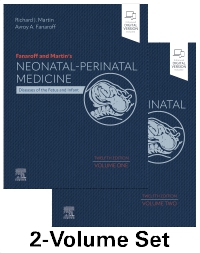
Fanaroff and Martin's Neonatal-Perinatal Medicine, 2-Volume Set, 12th Edition
by Richard J. Martin, MBBS FRACP and Avroy A. Fanaroff, MD, FRCPE, FRCPCH
Hardcover
ISBN:
9780323932660
Copyright:
2025
Publication Date:
02-19-2024
Page Count:
2352
Imprint:
Elsevier
List Price:
$293.99
In Stock
Most review copies are eBooks – how fast!
A review copy request is most likely to be fulfilled as an eBook on VitalSource rather than a print product, unless no eBook is available. eBooks become available in as little as a few hours. Print products will take between 7 and 10 days to arrive. To request a print copy, please contact us through the Evolve Support Center for further assistance or contact your Elsevier Sales Rep.
-
- Provides up-to-date, evidence-based content throughout, including state-of-the-art coverage of personalized medicine and genetics
- Contains new chapters on Big Data for the Smallest Patients: What we can learn from neonatal database research; Role of Umbilical Cord Management in Neonatal Resuscitation; Care of Periviable Micropremies: the Japanese perspective; Longer Term Respiratory Outcomes of Prematurity; and Perinatal Palliative Care
- Features extensive updates throughout, including blood and the hematopoietic system; social and economic contributors to neonatal outcome; fetal growth restriction; diagnostic imaging of the neonate; anesthesia in the neonate; postnatal bacterial infections; neonatal management of congenital heart disease; and retinopathy of prematurity
- Includes over 600 detailed, full-color illustrations that depict disorders in the clinical setting and explain complex information
- Provides indexing in both volumes that provides quick access to specific guidance
- Offers a global perspective with an expanded number of international contributors
- An ideal resource for clinical practice as well as recommended reading for neonatology board review or maintenance of certification
- An eBook version is included with purchase. The eBook allows you to access all of the text, figures, and references, with the ability to search, customize your content, make notes and highlights, and have content read aloud
-
1. Growth of Neonatal-Perinatal Medicine—A Historical Perspective
2. Epidemiology for Neonatologists
3. Big Data for the Smallest Patients—What We Can Learn From Neonatal Database Research
4. Medical Ethics in Neonatal Care
5. Improving the Quality, Safety, and Equity of Neonatal Intensive Care for Infants and Families
6. Importance of Simulation in Neonatology
7. Perinatal and Neonatal Care in Developing Countries
8. Social and Economic Contributors to Neonatal Outcome in the United States
9. Genetic Aspects of Perinatal Disease and Prenatal Diagnosis
10. Perinatal Ultrasound
11. Estimation of Fetal Well-Being
12. Surgical Treatment of the Fetus
13. Adverse Exposures to the Fetus
14. Fetal Growth Restriction: A Complex Interplay Between the Intrauterine and Maternal Environment
15. Developmental Origins of Health and Disease
16. Hypertensive Disorders of Pregnancy
17. Pregnancy Complicated by Diabetes Mellitus
18. Obstetric Management of Prematurity
19. Fetal Effects of Autoimmune Disease
20. Multiple Gestation: Fetal and Maternal Considerations
21. Post-Term Pregnancy
22. Immune and Nonimmune Hydrops Fetalis
23. Amniotic Fluid Volume
24. Perinatal Infections and Chorioamnionitis
25. Placental Pathology
26. Anesthesia for Labor and Delivery
27. Physical Examination of the Healthy Newborn
28. Birth Injuries
29. Congenital Anomalies
30. Overview and Initial Management of Delivery Room Resuscitation
31. Role of Positive Pressure Ventilation in Neonatal Resuscitation
32. Oxygen Therapy in Neonatal Resuscitation
33. Chest Compression, Medications, and Special Problems in Neonatal Resuscitation
34. Role of Umbilical Cord Management in Neonatal Resuscitation
35. Thermal Environment of the Intensive Care Nursery
36. Optimization of the Neonatal Intensive Care Unit Environment
37. Neonatal Cardiorespiratory Monitoring
38. Diagnostic Imaging of the Neonate
39. Anesthesia in the Neonate
40. Care of Periviable Micropreemies: The Japanese Perspective
41. The Late Preterm Infant
42. Nutritional Support for the Preterm Infant
43. Support for the Family
44. Perinatal Palliative Care
45. Principles of Drug Use in the Fetus and Neonate
46. Principles of Drug Use During Lactation
47. Pharmacokinetics in Neonatal Medicine
48. Infants of Substance-Using Mothers
49. Developmental Immunology
50. Postnatal Bacterial Infections
51. Fungal and Protozoal Infections of the Neonate
52. Viral Infections in the Neonate
53. Normal and Abnormal Brain Development
54. Cerebral White Matter Damage and Encephalopathy of Prematurity
55. Intracranial Hemorrhage and Stroke in the Neonate
56. Hypoxic-Ischemic Encephalopathy
57. Seizures in Neonates
58. Hypotonia and Neuromuscular Disease in the Neonate
59. Disorders in Head Shape and Size
60. Spinal Dysraphisms
61. Hearing Loss in the Newborn Infant
62. Early Childhood Neurodevelopmental Outcomes of High-Risk Neonates
63. Lung Development and Maturation
64. Assessment of Neonatal Pulmonary Function
65. Respiratory Distress Syndrome in the Neonate
66. Assisted Ventilation and Its Complications
67. Spectrum of Neonatal Respiratory Disorders
68. Apnea, Bradycardia, Hypoxemia, and the Foundation of Respiratory Control
69. Upper Airway Lesions in the Neonate
70. Bronchopulmonary Dysplasia in the Neonate
71. Postneonatal Respiratory Morbidity
72. Cardiac Embryology
73. Pulmonary Vascular Development
74. Prenatal Diagnosis of Congenital Heart Disease
75. Patent Ductus Arteriosus
76. Congenital Defects of the Cardiovascular System
77. Unique Neonatal Cardiovascular Problems
78. Disorders of Cardiac Rhythm and Conduction in Newborns
79. Neonatal Management of Congenital Heart Disease
80. The Hemostatic System
81. Red Blood Cell Disorders in the Fetus and Neonate
82. White Blood Cells and Immune Disorders
83. Neoplasms in the Neonate
84. Blood Component Therapy for the Neonate
85. Development of the Neonatal Gastrointestinal Tract
86. Gastrointestinal Reflux and Motility in the Neonate
87. Disorders of Digestion in the Neonate
88. Selected Gastrointestinal Anomalies in the Neonate
89. Neonatal Necrotizing Enterocolitis
90. Disorders of Carbohydrate Metabolism in the Neonate
91. Disorders of Calcium, Phosphorus, and Magnesium Metabolism in the Neonate
92. Thyroid Disorders in the Neonate
93. Disorders of Sex Development
94. Inborn Errors of Metabolism
95. Neonatal Jaundice and Liver Disease
96. Fluid, Electrolytes, and Acid-Base Homeostasis
97. The Kidney and Urinary Tract of the Neonate
98. The Skin of the Neonate
99. Examination and Common Problems in the Neonatal Eye
100. Retinopathy of Prematurity
101. Musculoskeletal Disorders in Neonates
102. Bone and Joint Infections in Neonates
103. Congenital Abnormalities of the Upper and Lower Extremities and Spine -
No accessibility information is available for this product.
In Stock
Most review copies are eBooks – how fast!
A review copy request is most likely to be fulfilled as an eBook on VitalSource rather than a print product, unless no eBook is available. eBooks become available in as little as a few hours. Print products will take between 7 and 10 days to arrive. To request a print copy, please contact us through the Evolve Support Center for further assistance or contact your Elsevier Sales Rep.

 as described in our