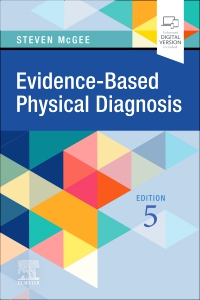

Evidence-Based Physical Diagnosis - Elsevier eBook on VitalSource, 5th Edition
Elsevier eBook on VitalSource
New Edition Expected Availability: 09-01-2025

Evidence-Based Physical Diagnosis - Elsevier eBook on VitalSource
-
- Emphasizes the most important physical signs needed to determine the underlying condition or disease. Internationally renowned author Dr. Steven McGee shows readers how to pare down the multiple tests needed to confirm a diagnosis, saving both the physician and patient time and money
- Features a reader-friendly outline format, including dozens of "EBM boxes" and accompanying "EBM ruler" illustrations
- Contains thorough updates from cover to cover, including new evidence on the scientific value of the Romberg test (spinal stenosis); oximeter paradoxus (cardiac tamponade); platypnea (liver disease); pupil size in red eye (acute glaucoma); hum test (hearing loss); and many more
- Begins each chapter with a list of Key Teaching Points, intended for readers desiring quick summaries and for teachers constructing concise bedside lessons
- Features a unique evidence-based calculator online that enables you to easily determine probability using likelihood ratios
- Enhanced eBook version included with purchase, which allows you to access all of the text, figures, and references from the book on a variety of devices
-
PART 1 Introduction
1. What is Evidence-Based Physical Diagnosis?
PART 2 Understanding The Evidence
2. Diagnostic Accuracy of Physical Findings
3. Using the Tables in This Book
4. Using the Online EBM Calculator
5. Reliability of Physical Findings
PART 3 General Appearance of the Patient
6. Mental Status Examination
7. Stance and Gait
8. Jaundice
9. Cyanosis
10. Anemia
11. Hypovolemia
12. Protein-Energy Malnutrition And Weight Loss
13. Obesity
14. Cushing Syndrome
PART 4 Vital Signs
15. Pulse Rate and Contour
16. Abnormalities of Pulse Rhythm
17. Blood Pressure
18. Temperature
19. Respiratory Rate and Abnormal Breathing Patterns
20. Pulse Oximetry
PART 5 Head and Neck
21. The Pupils
22. Diabetic Retinopathy
23. The Red Eye
24. Hearing
25. Thyroid and Its Disorders
26. Meninges
27. Peripheral Lymphadenopathy
PART 6 The Lungs
28. Inspection of the Chest
29. Palpation and Percussion of the Chest
30. Auscultation of the Lungs
31. Ancillary Tests
PART 7 Selected Pulmonary Disorders
32. Pneumonia
33. Chronic Obstructive Lung Disease
34. Pulmonary Embolism
35. Pleural Effusion
PART 8 The Heart
36. Inspection of the Neck Veins
37. Percussion of the Heart
38. Palpation of the Heart
39. Auscultation of the Heart: General Principles
40. The First and Second Heart Sounds
41. The Third and Fourth Heart Sounds
42. Miscellaneous Heart Sounds
43. Heart Murmurs: General Principles
PART 9 Selected Cardiac Disorders
44. Aortic Stenosis
45. Aortic Regurgitation
46. Miscellaneous Heart Murmurs
47. Disorders of the Pericardium
48. Congestive Heart Failure
49. Coronary Artery Disease
PART 10 Abdomen
50. Inspection of the Abdomen
51. Palpation and Percussion of the Abdomen
52. Abdominal Pain and Tenderness
53. Auscultation of the Abdomen
PART 11 Extremities
54. Peripheral Vascular Disease
55. The Diabetic Foot
56. Edema and Deep Vein Thrombosis
57. Examination of the Musculoskeletal System
PART 12 Neurologic Examination
58. Visual Field Testing
59. Nerves of the Eye Muscles (III, IV, and VI): Approach to Diplopia
60. Miscellaneous Cranial Nerves
61. Examination of the Motor System: Approach to Weakness
62. Examination of the Sensory System
63. Examination of the Reflexes
64. Disorders of the Nerve Roots, Plexuses, and Peripheral Nerves
65. Coordination and Cerebellar Testing
PART 13 Selected Neurologic Disorders
66. Tremor and Parkinson Disease
67. Hemorrhagic versus Ischemic Stroke
68. Acute Vertigo and Imbalance
69. Examination of Nonorganic Neurologic Disorders
PART 14 Examination in the Intensive Care Unit
70. Examination of Patients in the Intensive Care Unit
APPENDIX
71. Likelihood Ratios, Confidence Intervals, and Pretest Probability -
-
Ways of Reading
- The appearance of the text and page layout can be modified according to the capabilities of the reading system (font family and font size, spaces between paragraphs, sentences, words, and letters, as well as color of background and text)
- This e-publication is accessible to the full extent that the file format and types of content allow, on a specific reading device, by default, without necessarily including any additions such as textual descriptions of images or enhanced navigation
- No information about nonvisual reading is available
-
Conformance
- No information is available
-
Navigation
- Table of contents to all chapters of the text via links
- Page list to go to pages from the print source version
-
Rich Content
- No information is available
-
Hazards
- No information is available
-
Product Content
- No information is available
-
Legal Considerations
- No information is available
-
Additional Accessibility Information
- Page breaks included from the original print source
- For readers with color vision deficiency, use of color (e.g., in diagrams, graphics and charts, in prompts, or on buttons inviting a response) is not the sole means of graphical distinction or of conveying information
- E-publication includes basic navigation (usually less detailed than TOC-based navigation)
- Where links, controls or buttons are included in the content, the purpose or functionality of each link, control or button is apparent from the associated text alone - or where it is unclear, separate link, control or button descriptions are provided
- All (or substantially all) textual matter is arranged in a single logical reading order (including text that is visually presented as separate from the main text flow, e.g., in boxouts, captions, tables, footnotes, endnotes, citations, etc.). Non-textual content is also linked from within this logical reading order. (Purely decorative non-text content can be ignored).
- The language of the text has been specified (e.g., via the HTML or XML lang attribute) to optimise text-to-speech (and other alternative renderings), both at the whole document level and, where appropriate, for individual words, phrases or passages in a different language.
-
Ways of Reading

 as described in our