ISBN:
9780443284038
Copyright:
2027
Publication Date:
08-24-2026
Page Count:
2650
Imprint:
Elsevier
List Price:
$529.99
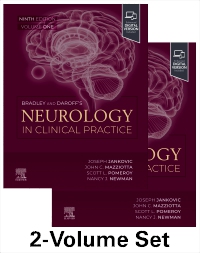
Bradley and Daroff's Neurology in Clinical Practice, 2-Volume Set, 9th Edition
by Joseph Jankovic, MD, John C. Mazziotta, MD, PhD, Scott L. Pomeroy, MD, PhD and Nancy J. Newman, MD
Hardcover
ISBN:
9780443284038
Copyright:
2027
Publication Date:
08-24-2026
Page Count:
2650
Imprint:
Elsevier
List Price:
$529.99
In Stock
Most review copies are eBooks – how fast!
A review copy request is most likely to be fulfilled as an eBook on VitalSource rather than a print product, unless no eBook is available. eBooks become available in as little as a few hours. Print products will take between 7 and 10 days to arrive. To request a print copy, please contact us through the Evolve Support Center for further assistance or contact your Elsevier Sales Rep.
Covering all aspects of today’s neurology in an easy-to-read, clinically relevant manner, Bradley and Daroff's Neurology in Clinical Practice, 9th Edition, is a practical, dynamic resource for practicing neurologists, psychiatrists, neurosurgeons, physician extenders, neuroscientists, neuropsychologists, and trainees. This comprehensive two-volume set, authored by world renowned experts, is ideal for daily reference, featuring a unique organization by presenting symptom/sign and by specific disease entities―allowing you to access content in ways that mirror how you practice. A straightforward style, evidence-based information, and robust interactive content supplemented by treatment algorithms and images keep you up to date with all that’s current in this fast-changing field.
-
- Provides authoritative guidance that equips you to effectively diagnose and manage the full range of neurological disorders
- Contains new and expanded content on artificial intelligence, brain health, pandemic health, health equity, and immune-based encephalopathies
- Offers a true-to-life view of how neurological disorders manifest through more than 100 detailed videos covering EEG and seizures; deep brain stimulation for Parkinson disease, tremor, and other movement disorders; sleep disorders; ocular oscillations and other ocular motility disorders; pupillary abnormalities; EMG evaluation; cranial neuropathies; disorders of upper and lower motor neurons; as well as other neurologic signs—with many videos new to this edition
- Allows you to perform easy searches through an intuitive organization by both symptom and grouping of diseases
- Features more than 150 expert contributors, a veritable Who’s Who in clinical neuroscience, who provide up-to-date guidance under the experienced editorial leadership of Drs. Joseph Jankovic, John C. Mazziotta, Scott L. Pomeroy, and Nancy J. Newman
- An eBook version is included with purchase. The eBook allows you to access all of the text, figures, and references, with the ability to search, customize your content, make notes and highlights, and have content read aloud
-
VOLUME 1: PRINCIPLES OF DIAGNOSIS
PART I Common Neurological Problems
1. Diagnosis of Neurological Disease
2. Episodic Impairment of Consciousness
3. Falls and Drop Attacks
4. Delirium
5. Coma and Disorders of Consciousness
6. Prolonged Comatose States and Brain Death
7. Intellectual and Memory Impairments
8. Global Developmental Delay and Regression
9. Behavior and Personality Change in Neurological Disorders
10. Depression and Psychosis in Neurological Practice
11. Limb Apraxias and Related Disorders
12. Agnosias
13. Aphasia and Aphasic Syndromes
14. Dysarthria and Apraxia of Speech
15. Neurogenic Dysphagia
16. Neuro-Ophthalmology: Afferent Visual System
17. Pupillary and Eyelid Abnormalities
18. Neuro-Ophthalmology: Ocular Motor System
19. Disturbances of Smell and Taste
20. Cranial and Facial Pain
21. Brainstem Syndromes
22. Neuro-Otology Diagnosis and Management of Neuro-Otological Disorders
23. Cerebellar Ataxia
24. Diagnosis and Assessment of Parkinson Disease and Other Movement Disorders
25. Gait Disorders
26. Hemiplegia and Monoplegia
27. Paraplegia and Spinal Cord Syndromes
28. Proximal, Distal, and Generalized Weakness
29. Muscle Pain and Cramps
30. Hypotonic (Floppy) Infant
31. Sensory Abnormalities of the Limbs, Trunk, and Face
32. Arm and Neck Pain
33. Lower Back and Lower Limb Pain
PART II Neurological Investigations and Interventions
SECTION A General Principles
34. Investigations in the Diagnosis and Management of Neurological Disease
35. Brain Health
36. Artificial Intelligence
SECTION B Clinical Neurophysiology
37. Electroencephalography and Evoked Potentials
38. Clinical Electromyography
39. Noninvasive Neuromodulation
40. Intracranial Neuromodulation
41. Intraoperative Monitoring
SECTION C Neuroimaging
42. Structural Imaging Using Magnetic Resonance Imaging and Computed Tomography
43. Vascular Imaging: Computed Tomographic Angiography, Magnetic Resonance Angiography, and Ultrasound
44. Functional and Molecular Neuroimaging
45. Ocular Functional and Structural Investigations
SECTION D Clinical Neurosciences
46. Neuropsychological Assessment
47. Uro-Neurology
48. Sexual Dysfunction in Neurological Disorders
49. Neuroepidemiology
50. Clinical Neurogenetics
51. Neuroimmunology
52. Neuroendocrinology
VOLUME 2: NEUROLOGICAL DISORDERS AND THEIR MANAGEMENT
PART III Neurological Diseases and Their Treatment
SECTION A General Principles
53. Management of Neurological Disease
54. Pain Management
55. Neurointensive Care
56. Principles of Neuroendovascular Therapy
57. Neurological Rehabilitation
58. Transition to Adult Care for Youth With Chronic Neurological Disorders
59. Palliative and End-of-Life Care in Neurological Disease
SECTION B Neurological Complications of Systemic Disease
60. Neurological Complications of Systemic Disease: Adults
61. Neurological Complications of Systemic Disease: Children
SECTION C Trauma of the Nervous System
62. Basic Neuroscience of Neurotrauma
63. Chronic Traumatic Encephalopathy and Other Consequences of Repetitive Head Impacts
64. Craniocerebral Trauma
65. Spinal Cord Trauma
66. Trauma of the Nervous System: Peripheral Nerve Trauma
SECTION D Vascular Diseases of the Nervous System
67. Ischemic Cerebrovascular Disease
68. Intracerebral Hemorrhage
69. Intracranial Aneurysms and Subarachnoid Hemorrhage
70. Stroke in Children
71. Spinal Cord Vascular Disease
SECTION E Cancer and the Nervous System
72. Epidemiology of Brain Tumors
73. Pathology and Molecular Genetics
74. Clinical Features of Brain Tumors and Complications of Their Treatment
75. Management of Primary Nervous System Tumors in Adults
76. Primary Nervous System Tumors in Infants and Children
77. Nervous System Metastases
SECTION F Infections of the Nervous System
78. Neurological Manifestations of Human Immunodeficiency Virus Infection in Adults
79. Viral Encephalitis and Meningitis
80. Bacterial, Fungal, and Parasitical Diseases of the Nervous System
SECTION G Other Neurological Disorders
81. Multiple Sclerosis and Other Inflammatory Demyelinating Diseases of the Central Nervous System
82. Paraneoplastic Disorders of the Nervous System
83. Autoimmune Encephalitis
84. Anoxic-Ischemic Encephalopathy
85. Metabolic Encephalopathies
86. Deficiency Diseases of the Nervous System
87. Effects of Toxins and Physical Agents on the Nervous System
88. Effects of Drug Misuse on the Nervous System
89. Brain Edema and Disorders of Cerebrospinal Fluid Circulation
90. Developmental Disorders of the Nervous System
91. Autism and Other Neurodevelopmental Disabilities
92. Inherited Metabolic Disorders and the Nervous System
93. Neurodegenerative Disease Processes
94. Mitochondrial Disorders
95. Prion Diseases
96. Alzheimer Disease and Other Dementias
97. Parkinson Disease and Other Movement Disorders
98. Disorders of Upper and Lower Motor Neurons
99. Channelopathies: Episodic and Electrical Disorders of the Nervous System
100. Neurocutaneous Syndromes
101. Epilepsies
102. Sleep and Its Disorders
103. Headache and Other Craniofacial Pain
104. Cranial Neuropathies
105. Disorders of Bones, Joints, Ligaments, and Meninges
106. Disorders of Nerve Roots and Plexuses
107. Disorders of Peripheral Nerves
108. Disorders of the Autonomic Nervous System
109. Disorders of Neuromuscular Transmission
110. Disorders of Skeletal Muscle
111. Neurological Problems in the Newborn
112. Cerebral Palsy
113. Neurological Problems of Pregnancy
114. Functional Neurological Disorder and Associated Conditions -
No accessibility information is available for this product.
In Stock
Most review copies are eBooks – how fast!
A review copy request is most likely to be fulfilled as an eBook on VitalSource rather than a print product, unless no eBook is available. eBooks become available in as little as a few hours. Print products will take between 7 and 10 days to arrive. To request a print copy, please contact us through the Evolve Support Center for further assistance or contact your Elsevier Sales Rep.

 as described in our