
ISBN:
9780443410369
Copyright:
2027
Publication Date:
03-04-2026
Page Count:
1048
Imprint:
Elsevier
List Price:
$347.99
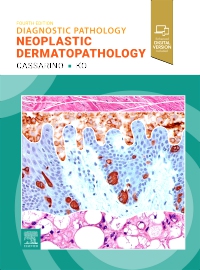
Diagnostic Pathology: Neoplastic Dermatopathology, 4th Edition
by David S. Cassarino, MD, PhD and Christine J. Ko, MD
Hardcover
ISBN:
9780443410369
Copyright:
2027
Publication Date:
03-04-2026
Page Count:
1048
Imprint:
Elsevier
List Price:
$347.99
In Stock
Most review copies are eBooks – how fast!
A review copy request is most likely to be fulfilled as an eBook on VitalSource rather than a print product, unless no eBook is available. eBooks become available in as little as a few hours. Print products will take between 7 and 10 days to arrive. To request a print copy, please contact us through the Evolve Support Center for further assistance or contact your Elsevier Sales Rep.
This expert volume in the Diagnostic Pathology series is an excellent point-of-care resource for practitioners at all levels of experience and training. Covering a broad array of cutaneous neoplasms and their differential diagnoses, it incorporates the most recent clinical, pathological, and molecular knowledge in the field to provide a comprehensive overview of all key issues relevant to today’s practice. Succinctly written, richly illustrated, and easy to use, Diagnostic Pathology: Neoplastic Dermatopathology, fourth edition, is a one-stop reference for accurate, complete pathology reports, ideal as a day-to-day reference or as a reliable training resource.
-
- Features updates throughout, as well as new chapters on key topics, including more than 10 new chapters on nail tumors and soft tissue tumors
- Details recent advances in diagnostic, immunohistochemical, molecular, and genetic techniques used for identification in neoplastic dermatopathology, including terminology updates needed for everyday diagnostic determinations on often difficult and challenging cases
- Contains detailed yet concise chapters with critical information such as definitions, epidemiology, clinical presentation, macro- and microscopic features, differential diagnoses, and pathologic interpretation pearls—all in an easy-to-reference format
- Features 3,000 high-quality print images (with an additional 2,700 images in the complimentary eBook), including gross pathology and clinical photographs, histology images, full-color medical illustrations, and immunohistochemistry and radiology images—all carefully annotated to help you quickly recognize established entities
- Includes updated staging details for melanoma, cutaneous lymphoma, and additional tumors
- Shares the knowledge and expertise of two highly regarded experts: Dr. David S. Cassarino and Dr. Christine Ko, both dermatopathologists with one a pathologist and one a dermatologist, who present unified yet diverging perspectives in this challenging area
- Reflects the most recent information from the World Health Organization (WHO) 2023 update and European Organisation for Research and Treatment of Cancer (EORTC)
- Features a templated, highly formatted design; concise, bulleted text; key facts in each chapter; and an extensive index for easy reference
- Includes an eBook that provides everything in the print version as well as additional images, text, and references, with the ability to search, customize your content, make notes and highlights, and have content read aloud
-
PART I: MELANOCYTIC TUMORS OF SKIN
Section 1: Benign Melanocytic Tumors (Nevi)
Congenital Melanocytic Nevi
Common Acquired Melanocytic Nevi
Conventional Blue Nevi
Cellular Blue Nevi
Combined Nevi
Halo Nevi
Nevi of Special Sites
Inverted Type A Nevi
Deep Penetrating Nevi
36 Conjunctival Melanocytic Nevi
Dermal Melanocytosis: Acquired and Congenital
Paraganglioma-Like Dermal Melanocytic Tumor
Dysplastic Melanocytic Nevi
Spitz (Spindle and Epithelioid Cell) Nevi
Pigmented Spindle Cell Nevus (Reed Nevus)
BAP1-Inactivated Melanocytoma
Section 2: Malignant Tumors (Melanomas And Related Lesions)
MELANOMA IN SITU
Melanoma In Situ, Lentigo Maligna Type
Melanoma In Situ, Superficial Spreading Type
Melanoma In Situ, Not Otherwise Specified
INVASIVE MELANOMA
Childhood Melanoma
Atypical/Borderline and Malignant Spitz Tumors
Melanoma, Lentigo Maligna Type
Melanoma, Superficial Spreading Type
Melanoma, Nodular Type
Desmoplastic Melanoma
Nevoid Melanoma
Acral Lentiginous Melanoma
Oral Melanoma
Mucosal Melanoma (Genital)
Sinonasal Melanoma
Conjunctival Melanoma
Malignant Cellular Blue Nevus (Melanoma Arising in or Mimicking a Cellular Blue Nevus)
Pigmented Epithelioid Melanocytoma ("Animal-Type Melanoma")
Primary Dermal Melanoma
Other Unusual and Rare Variants of Melanoma
Staging for Specimens of Malignant Melanoma of Skin
PART II: NONMELANOCYTIC TUMORS OF SKIN
Section 1: Epithelial Cysts
Epidermoid/Epidermal Inclusion Cyst
Pilar (Trichilemmal) Cyst
Proliferating Pilar (Trichilemmal) Cyst/Tumor
HPV-Related Epidermal Cyst
Vellus Hair Cyst
Steatocystoma (Multiplex)
Cutaneous Keratocyst
Milium
Hidrocystoma (Apocrine and Eccrine)
Digital Mucous Cyst
Bronchogenic Cyst
Branchial Cleft Cyst
Median Raphe Cyst
Cutaneous Ciliated Cyst
Section 2: Epidermal Tumors
BENIGN EPIDERMAL TUMORS AND PROLIFERATIVE LESIONS
Epidermal Nevus
Seborrheic Keratosis (and Variants)
Pseudoepitheliomatous Hyperplasia
Warty Dyskeratoma
Acantholytic and Acantholytic Dyskeratotic Acanthoma
Verruca Vulgaris (and Variants)
Condyloma Acuminatum (Genital Wart)
Prurigo Nodularis
Large Cell Acanthoma
Clear Cell Acanthoma
Clear Cell Papulosis
Toker Cell Hyperplasia
Porokeratosis
PREMALIGNANT AND MALIGNANT EPIDERMAL TUMORS
Actinic Keratosis
Actinic Cheilitis
Squamous Cell Carcinoma In Situ (Bowen Disease)
Bowenoid Papulosis
Penile and Vulvar Intraepithelial Neoplasia
Epidermodysplasia Verruciformis
Verrucous Carcinoma (and Variants)
Squamous Cell Carcinoma (and Variants)
Keratoacanthoma
Lymphoepithelioma-Like Carcinoma of Skin
Basal Cell Carcinoma
Extramammary Paget Disease
Squamomelanocytic Tumor
Staging for Specimens of Squamous Cell Carcinoma of Skin
Section 3: Tumors and Tumor-Like Conditions of the Hair Follicle
Nevus Sebaceus and Follicular Hamartomas
Trichofolliculoma
Trichoadenoma
Trichoepithelioma
Trichoblastoma and Trichoblastic Carcinoma
Panfolliculoma
Tumor of the Follicular Infundibulum
Dilated Pore of Winer
Pilar Sheath Acanthoma
Inverted Follicular Keratosis
Trichilemmoma
Trichilemmal Carcinoma
Pilomatrixoma and Pilomatrical Carcinoma
Fibrofolliculoma and Trichodiscoma
Section 4: Tumors and Tumor-Like Conditions With Sebaceous Differentiation
Sebaceous Hyperplasia
Superficial Epithelioma With Sebaceous Differentiation
Sebaceoma (Sebaceous Epithelioma)
Sebaceous Adenoma
Sebaceous Carcinoma
Section 5: Neoplasms and Proliferations of Eccrine and Apocrine Sweat Glands
Tubular Apocrine Adenoma
Syringocystadenoma Papilliferum
Hidradenoma Papilliferum
Hidradenoma
Hidradenocarcinoma
Poroma and Dermal Duct Tumor
Porocarcinoma
Cylindroma and Cylindrocarcinoma
Spiradenoma and Spiradenocarcinoma
Adenoid Cystic Carcinoma
Primary Cutaneous Endocrine Mucin-Producing Carcinoma
Primary Cutaneous Mucinous Carcinoma
Apocrine Carcinoma (Apocrine Adenocarcinoma)
Digital Papillary Adenocarcinoma
Eccrine Hamartomas
Papillary Eccrine Adenoma
Syringoma
Syringofibroadenoma
Eccrine Carcinoma
Squamoid Eccrine Ductal Carcinoma
Microcystic Adnexal Carcinoma
Cutaneous Mixed Tumor (Chondroid Syringoma)
Malignant Mixed Tumor
Section 6: Nail Tumors
Onychomatricoma
Onychopapilloma
Onychocytic Matricoma
Onychocytic Carcinoma
Subungual Exostosis
Section 7: Metastatic Tumors
Metastatic Skin Tumors
Metastatic Tumors to the Skin
Section 8: Fibrous and "Fibrohistiocytic" Tissue Tumors
BENIGN FIBROUS AND "FIBROHISTIOCYTIC" TISSUE TUMORS
Fibroepithelial Polyp (Acrochordon)
Keloids and Hypertrophic Scars
Desmoplastic Fibroblastoma
Pleomorphic Fibroma
Sclerotic Fibroma
Fibromatosis
Juvenile Hyaline Fibromatosis
Angiofibroma and Related Lesions
Acral Fibrokeratoma
Dermatofibroma and Fibrous Histiocytoma
Epithelioid Cell Histiocytoma
Dermatomyofibroma
Fibrous Hamartoma of Infancy
Inclusion Body Fibromatosis
Angiomyofibroblastoma
Multinucleate Cell Angiohistiocytoma
Localized-Type Tenosynovial Giant Cell Tumor
Myofibroma and Myofibromatosis
Cutaneous Myxoma and Angiomyxoma
Superficial Acral Fibromyxoma
Pseudosarcomatous Fibroblastic Proliferations
ATYPICAL AND MALIGNANT FIBROUS AND "FIBROHISTIOCYTIC" TISSUE TUMORS
Angiomatoid Fibrous Histiocytoma
Plexiform Fibrohistiocytic Tumor
Dermatofibrosarcoma Protuberans
Atypical Fibroxanthoma
Pleomorphic (Dermal) Sarcoma
Adult-Type Fibrosarcoma
Myxofibrosarcoma
Superficial Low-Grade Fibromyxoid Sarcoma
Myxoinflammatory Fibroblastic Sarcoma
Superficial CD34 (+) Fibroblastic Tumor
EWSR1::SMAD3 Fibroblastic Tumor
Section 9: Vascular and Perivascular Tumors and Pseudotumors
Vascular Malformations
Arteriovenous Tumor
Capillary, Venous, and Cavernous Hemangiomas
Infantile (Juvenile) Hemangioma
Sinusoidal Hemangioma
Tufted Angioma
Glomeruloid Hemangioma
Angiolymphoid Hyperplasia With Eosinophilia
Hobnail (Targetoid Hemosiderotic) Hemangioma
Spindle Cell Hemangioma
Microvenular Hemangioma
Verrucous Venous Malformation
Angiokeratoma -
No accessibility information is available for this product.
In Stock
Most review copies are eBooks – how fast!
A review copy request is most likely to be fulfilled as an eBook on VitalSource rather than a print product, unless no eBook is available. eBooks become available in as little as a few hours. Print products will take between 7 and 10 days to arrive. To request a print copy, please contact us through the Evolve Support Center for further assistance or contact your Elsevier Sales Rep.

 as described in our