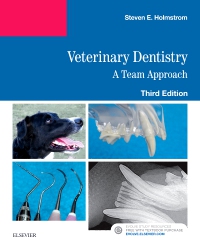

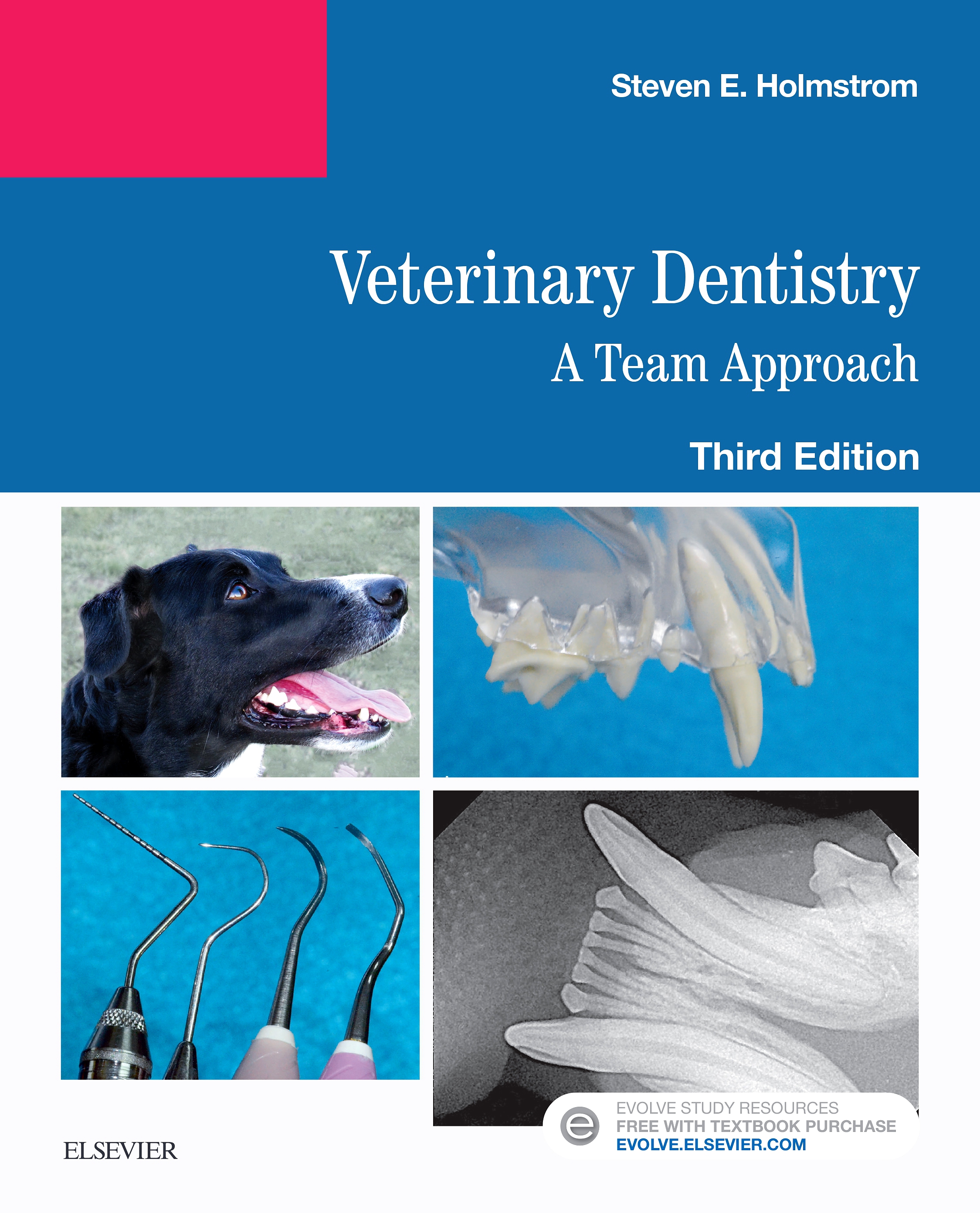
Veterinary Dentistry: A Team Approach - Elsevier E-Book on Vitalsource, 3rd Edition
Elsevier eBook on VitalSource
From radiology and anesthesia to patient needs and client education, Veterinary Dentistry: A Team Approach, 3rd Edition covers everything students need to know about this unique practice! This handy full-color guide is great for practitioners who are new to veterinary dentistry and for those who want to learn more about the underlying theories of the practice. The first section of the book presents dental procedures, with chapters on oral examinations, instruments, safety, and anesthesia, followed by coverage of more difficult areas such as endodontics, radiology and periodontics. The book concludes with a chapter on marketing veterinary dentistry and commonly asked client questions, replete with proper responses. New for this edition is expanded coverage of pocket pets and an added section on diagnostic radiology and interpretation. It also features an all-new Evolve companion website including client handouts, an instructor test bank, image collection, and PowerPoint slides. With its comprehensive coverage and team approach, this text is the ideal resource for both vet tech and vet students to quickly master the art of animal dentistry.
New Edition Expected Availability: 10-24-2024

Veterinary Dentistry: A Team Approach - Elsevier E-Book on Vitalsource
-
- NEW! Updated terminology throughout, based on the American Veterinary Dental College Nomenclature Committee, helps you master the proper language and improve office communication
- NEW! Section on diagnostic radiology and interpretation helps you understand nuances on radiographs
- NEW! Expanded coverage of pocket pets provides vital information on these increasingly popular pets
- NEW Full-color illustrations gives you a better picture of concepts, equipment, and procedure details
-
- NEW! Section on diagnostic radiology and interpretation helps your students understand nuances on radiographs
- NEW! Expanded coverage of pocket pets provides vital information on these increasingly popular pets
- NEW! Updated terminology throughout, based on the American Veterinary Dental College Nomenclature Committee, helps your students master the proper language and improve office communication
- Coverage of the essential dentistry-related tasks in the CYTEA Manual of Accreditation for Veterinary Technology Programs enables educators to evaluate students’ proficiency related to the essential tasks
- Clear, heavily illustrated procedures provide a more detailed look at the skills students need to master
- NEW Full-color illustrations give students a better picture of concepts, equipment, and procedure details
- Dental terminology is incorporated to help students master the proper language and improve office communication
- Inclusion of digital dental radiography develops students’ understanding of direct radiology versus computerized radiology and the economic considerations of both
- Vet Tech Threads include a variety of pedagogical features including learning objective, key terms, chapter outlines, Technician Notes, and more to help students navigate through chapters and focus their learning
-
1. Introduction to Veterinary Dentistry
2. The Oral Examination and Disease Recognition
3. Dental Instruments and Equipment
4. Personal Safety and Ergonomics
5. Local Anesthesia
6. Pathogenesis of Periodontal Disease
7. The Complete Prophy
8. Home-Care Instruction and Products
9. Periodontal Therapy
10. Feline Dentistry
11. Intraoral Imaging
12. Exodontics (Extractions)
13. Advanced Veterinary Dental Procedures: Periodontal Surgery, Endodontics, Restorations, and Orthodontics
14. Rodent, Lagomorph, and Ferret Dentistry
15. Marketing Veterinary Dentistry
Appendixes
A. Dental Equipment
B. AVDC Abbreviations
C. AVDC Nomenclature
D. AVDC Statement on Dental Health Care Providers -
-
Ways of Reading
- The appearance of the text and page layout can be modified according to the capabilities of the reading system (font family and font size, spaces between paragraphs, sentences, words, and letters, as well as color of background and text)
- This e-publication is accessible to the full extent that the file format and types of content allow, on a specific reading device, by default, without necessarily including any additions such as textual descriptions of images or enhanced navigation
- No information about nonvisual reading is available
-
Conformance
- No information is available
-
Navigation
- Table of contents to all chapters of the text via links
- Page list to go to pages from the print source version
-
Rich Content
- No information is available
-
Hazards
- No information is available
-
Product Content
- No information is available
-
Legal Considerations
- No information is available
-
Additional Accessibility Information
- Page breaks included from the original print source
- For readers with color vision deficiency, use of color (e.g., in diagrams, graphics and charts, in prompts, or on buttons inviting a response) is not the sole means of graphical distinction or of conveying information
- E-publication includes basic navigation (usually less detailed than TOC-based navigation)
- Where links, controls or buttons are included in the content, the purpose or functionality of each link, control or button is apparent from the associated text alone - or where it is unclear, separate link, control or button descriptions are provided
- All (or substantially all) textual matter is arranged in a single logical reading order (including text that is visually presented as separate from the main text flow, e.g., in boxouts, captions, tables, footnotes, endnotes, citations, etc.). Non-textual content is also linked from within this logical reading order. (Purely decorative non-text content can be ignored).
- The language of the text has been specified (e.g., via the HTML or XML lang attribute) to optimise text-to-speech (and other alternative renderings), both at the whole document level and, where appropriate, for individual words, phrases or passages in a different language.
-
Ways of Reading

 as described in our