ISBN:
9780323811415
Copyright:
2025
Publication Date:
09-30-2024
Page Count:
248
Imprint:
Elsevier
List Price:
$37.99

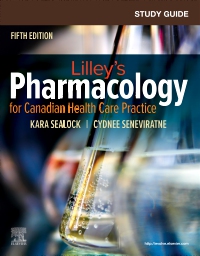
Study Guide for Lilley's Pharmacology for Canadian Health Care Practice - Elsevier eBook on VitalSource, 5th Edition
by Kara Sealock, RN, BN, MEd, EdD and Cydnee Seneviratne, RN, BScN, MN, PhD
Elsevier eBook on VitalSource
ISBN:
9780323811415
Copyright:
2025
Publication Date:
09-30-2024
Page Count:
248
Imprint:
Elsevier
List Price:
$37.99
Was
$37.99
Now $26.59
Or $0.00 with a valid access code
Ensure your mastery of need-to-know Canadian pharmacology nursing principles with the Study Guide for Lilley’s Pharmacology for Canadian Health Care Practice, 5th Edition. Designed to accompany the Lilley’s textbook, this dynamic study guide helps you better understand, retain, and apply the information and concepts from each chapter of the text. Worksheets for each chapter include multiple-choice review questions, critical thinking and application questions, case studies, and a wealth of other learning activities to help you fully prepare for credentialling exams.
-
- NEW! Thoroughly updated content reflects the organization and updated information housed in the fifth edition of Lilley’s Pharmacology for Canadian Health Care Practice.
- Chapter-by-chapter worksheets are divided into three main sections: chapter review and examination preparation including multiple-choice and matching questions, critical thinking and application questions with some chapters including a critical thinking crossword puzzle, and case studies.
- Chapter review and examination preparation in each chapter worksheet includes a number of application-based practice questions for the Next Generation NCLEX® (NGN), including at least one alternate-item question per chapter.
- UNIQUE! Cartoon-illustrated study tips help you manage your study time more effectively and expand upon the study skills tips included on the accompanying Evolve website.
- Variety of questions includes fill-in-the-blank, multiple choice, labelling and ordering, matching, and short answer.
- Focus on prioritization features at least one prioritization exercise in each chapter, in which you must evaluate a clinical scenario and answer the question: “What is the nurse’s best action?” These exercises provide practice with identifying the most important, need-to-know nursing actions.
- Overview of Dosage Calculations section features explanations of key drug calculations concepts, sample drug labels, practice problems, and a practice quiz.
- Answers for all exercises are provided at the back of the book to facilitate self-study.
-
1. Nursing Practice in Canada and Drug Therapy
2. Pharmacological Principles
3. Legal and Ethical Considerations
4. Patient-Focused Considerations
5. Gene Therapy and Pharmacogenomics
6. Medication Errors: Preventing and Responding
7. Patient Education and Drug Therapy
8. Over-the-Counter Drugs and Natural Health Products
9. Vitamins and Minerals
10. Principles of Drug Administration
11. Analgesic Drugs
12. General and Local Anaesthetics
13. Central Nervous System Depressants and Muscle Relaxants
14. Central Nervous System Stimulants and Related Drugs
15. Antiepileptic Drugs
16. Antiparkinsonian Drugs
17. Psychotherapeutic Drugs
18. Substance Use Disorder
19. Adrenergic Drugs
20. Adrenergic-Blocking Drugs
21. Cholinergic Drugs
22. Cholinergic-Blocking Drugs
23. Antihypertensive Drugs
24. Antianginal Drugs
25. Heart Failure Drugs
26. Diuretic Drugs
27. Antidysrhythmic Drugs
28. Coagulation Modifier Drugs
29. Antilipemic Drugs
30. Fluids and Electrolytes
31. Pituitary Drugs
32. Thyroid and Antithyroid Drugs
33. Antidiabetic Drugs
34. Adrenal Drugs
35. Women’s Health Drugs
36. Men’s Health Drugs
37. Antihistamines, Decongestants, Antitussives, and Expectorants
38. Respiratory Drugs
39. Acid-Controlling Drugs
40. Antidiarrheal Drugs and Laxatives
41. Antiemetic and Antinausea Drugs
42. Nutritional Supplements
43. Antibiotics Part 1: Sulfonamides, Penicillins, Cephalosporins, Macrolides, and Tetracyclines
44. Antibiotics Part 2: Aminoglycosides, Fluoroquinolones, and Other Drugs
45. Antiviral Drugs
46. Antitubercular Drugs
47. Antifungal Drugs
48. Antimalarial, Antiprotozoal, and Anthelmintic Drugs
49. Anti-inflammatory and Antigout Drugs
50. Immunosuppressant Drugs
51. Immunizing Drugs and Pandemic Preparedness
52. Antineoplastic Drugs Part 1: Cancer Overview and Cell Cycle–Specific Drugs
53. Antineoplastic Drugs Part 2: Cell Cycle–Nonspecific and Miscellaneous Drugs
54. Biological Response–Modifying Drugs and Antirheumatic Drugs
55. Anemia Drugs
56. Dermatological Drugs
57. Ophthalmic Drugs
58. Otic Drugs -
-
Ways of Reading
- The appearance of the text and page layout can be modified according to the capabilities of the reading system (font family and font size, spaces between paragraphs, sentences, words, and letters, as well as color of background and text)
- This e-publication is accessible to the full extent that the file format and types of content allow, on a specific reading device, by default, without necessarily including any additions such as textual descriptions of images or enhanced navigation
- No information about nonvisual reading is available
-
Conformance
- No information is available
-
Navigation
- Table of contents to all chapters of the text via links
- Page list to go to pages from the print source version
-
Rich Content
- No information is available
-
Hazards
- No information is available
-
Product Content
- No information is available
-
Legal Considerations
- No information is available
-
Additional Accessibility Information
- Content is enhanced with ARIA roles to optimize organization and facilitate navigation
- Page breaks included from the original print source
- For readers with color vision deficiency, use of color (e.g., in diagrams, graphics and charts, in prompts, or on buttons inviting a response) is not the sole means of graphical distinction or of conveying information
- E-publication includes basic navigation (usually less detailed than TOC-based navigation)
- Where links, controls or buttons are included in the content, the purpose or functionality of each link, control or button is apparent from the associated text alone - or where it is unclear, separate link, control or button descriptions are provided
- All (or substantially all) textual matter is arranged in a single logical reading order (including text that is visually presented as separate from the main text flow, e.g., in boxouts, captions, tables, footnotes, endnotes, citations, etc.). Non-textual content is also linked from within this logical reading order. (Purely decorative non-text content can be ignored).
- The language of the text has been specified (e.g., via the HTML or XML lang attribute) to optimise text-to-speech (and other alternative renderings), both at the whole document level and, where appropriate, for individual words, phrases or passages in a different language.
-
Ways of Reading


Was
$37.99
Now $26.59
Or $0.00 with a valid access code

 as described in our