ISBN:
9780323812566
Copyright:
2023
Publication Date:
02-24-2022
Page Count:
880
Imprint:
Mosby
List Price:
$91.99

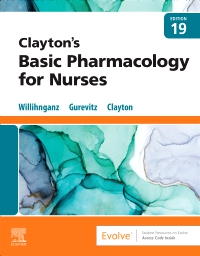
Clayton’s Basic Pharmacology for Nurses - Elsevier eBook on VitalSource, 19th Edition
by Michelle J. Willihnganz, MS, RN, CNE, Samuel L. Gurevitz, PharmD, CGP and Bruce D. Clayton, BS, PharmD, RPh
Elsevier eBook on VitalSource
ISBN:
9780323812566
Copyright:
2023
Publication Date:
02-24-2022
Page Count:
880
Imprint:
Mosby
List Price:
$91.99
Was
$91.99
Now $82.79
Or $0.00 with a valid access code
Learn safe, effective nursing care for patients receiving drug therapy! Basic Pharmacology for Nurses, 19th Edition helps you understand the principles of pharmacology and apply them to nursing practice. Known for its practical application of the nursing process to drugs and disorders, this book explains how to make informed decisions about drug therapy, educate patients, and administer medications. This edition adds new Next Generation NCLEX® (NGN)-style case studies and questions to prepare you for the critical thinking questions on the NGN exam. Concise and easy to use, this text teaches the basics of medication administration and drug actions.
New Edition Expected Availability: 01-31-2025

Clayton’s Basic Pharmacology for Nurses - Elsevier E-Book on VitalSource
Elsevier eBook on VitalSource
ISBN: 9780443263996
-
- NEW! Next Generation NCLEX® (NGN)-style questions help you develop higher cognitive thinking skills, including clinical judgment, and provide opportunities to practice for the new question formats on the NGN exam
- NEW! Updated content is included for newly approved and frequently prescribed pharmaceutical drugs, and for their therapeutic uses
- NEW! Unfolding case studies help you translate pharmacological knowledge into nursing practice and provide preparation for the Next Generation NCLEX exam
-
- Application of the nursing process includes an overview of general principles of nursing care for each disorder, along with specific nursing considerations for drug treatment
- Drug monographs are provided for each major drug class, describing actions, uses, and therapeutic outcomes for each class
- Medication Administration unit covers assessment, techniques, procedures, and documentation for the safe administration of percutaneous, enteral, and parenteral drugs
- Medication safety is emphasized with Medication Safety Alerts and Clinical Pitfall boxes, as well as Do Not Confuse and High Alert icons
- Clinical Goldmine boxes highlight tips and best practices for clinical procedures
- Lifespan Considerations boxes draw attention to the implications of drug therapy for children, pregnant and breastfeeding women, and older adults
- Drug tables summarize generic and brand names, availability, and dosage ranges for key medications for each disorder.Get Ready for the NCLEX® Examination! section at the end of each chapter covers key points as well as review questions, preparing you for course assessments and the NCLEX Examination
- Learning resources on the Evolve website include video clips of medication administration, animations of drug actions, drug calculators, patient teaching guides, and Next Generation NCLEX® review questions
- Study guide corresponds to the textbook and offers review questions and clinical scenarios to reinforce your understanding of nursing pharmacology. Available separately
-
-
 Study Guide for Clayton's Basic Pharmacology for Nurses - Elsevier eBook on VitalSourceElsevier eBook on VitalSource
 -

-
-
Unit 1: Applying Pharmacology to Nursing Practice
1. Drug Definitions, Standards, and Information Sources
2. Basic Principles of Drug Action and Drug Interactions
3. Drug Action Across the Life Span
4. The Nursing Process and Pharmacology
5. Patient Education to Promote Health
Unit 2: Illustrated Atlas of Medication Administration
6. Principles of Medication Administration and Medication Safety
7. Percutaneous Administration
8. Enteral Administration
9. Parenteral Administration: Safe Preparation of Parenteral Medications
10. Parenteral Administration: Intradermal, Subcutaneous, and Intramuscular Routes
11. Parenteral Administration: Intravenous Route
Unit 3: Drugs Affecting the Autonomic and Central Nervous Systems
12. Drugs Affecting the Autonomic Nervous System
13. Drugs Used for Sedation and Sleep
14. Drugs Used for Neurodegenerative Disorders
15. Drugs Used for Anxiety Disorders
16. Drugs Used for Depressive and Bipolar Disorders
17. Drugs Used for Psychoses
18. Drugs Used for Seizure Disorders
19. Drugs Used for Pain Management
Unit 4: Drugs Affecting the Cardiovascular System
20. Introduction to Cardiovascular Disease and Metabolic Syndrome
21. Drugs Used to Treat Dyslipidemias
22. Drugs Used to Treat Hypertension
23. Drugs Used to Treat Dysrhythmias
24. Drugs Used to Treat Angina Pectoris
25. Drugs Used to Treat Peripheral Vascular Disease
26. Drugs Used to Treat Thromboembolic Disorders
27. Drugs Used to Treat Heart Failure
28. Drugs Used for Diuresis
Unit 5: Drugs Affecting the Respiratory System
29. Drugs Used to Treat Upper Respiratory Disease
30. Drugs Used to Treat Lower Respiratory Disease
Unit 6: Drugs Affecting the Digestive System
31. Drugs Used to Treat Oral Disorders
32. Drugs Used to Treat Gastroesophageal Reflux and Peptic Ulcer Disease
33. Drugs Used to Treat Nausea and Vomiting
34. Drugs Used to Treat Constipation and Diarrhea
Unit 7: Drugs That Affect the Endocrine System
35. Drugs Used to Treat Diabetes Mellitus
36. Drugs Used to Treat Thyroid Disease
37. Corticosteroids
38. Gonadal Hormones
Unit 8: Drugs Affecting the Reproductive System
39. Drugs Used in Obstetrics
40. Drugs Used in Men’s and Women’s Health
41. Drugs Used to Treat Disorders of the Urinary System
42. Drugs Used to Treat Glaucoma and Other Eye Disorders
43. Drugs Used to Treat Cancer
44. Drugs Used to Treat the Musculoskeletal System
45. Drugs Used to Treat Infections
46. Nutrition
47. Herbal and Dietary Supplement Therapy
48. Substance Abuse -
-
Ways of Reading
- The appearance of the text and page layout can be modified according to the capabilities of the reading system (font family and font size, spaces between paragraphs, sentences, words, and letters, as well as color of background and text)
- This e-publication is accessible to the full extent that the file format and types of content allow, on a specific reading device, by default, without necessarily including any additions such as textual descriptions of images or enhanced navigation
- No information about nonvisual reading is available
-
Conformance
- No information is available
-
Navigation
- Table of contents to all chapters of the text via links
- Page list to go to pages from the print source version
-
Rich Content
- No information is available
-
Hazards
- No information is available
-
Product Content
- No information is available
-
Legal Considerations
- No information is available
-
Additional Accessibility Information
- Page breaks included from the original print source
- For readers with color vision deficiency, use of color (e.g., in diagrams, graphics and charts, in prompts, or on buttons inviting a response) is not the sole means of graphical distinction or of conveying information
- E-publication includes basic navigation (usually less detailed than TOC-based navigation)
- Where links, controls or buttons are included in the content, the purpose or functionality of each link, control or button is apparent from the associated text alone - or where it is unclear, separate link, control or button descriptions are provided
- All (or substantially all) textual matter is arranged in a single logical reading order (including text that is visually presented as separate from the main text flow, e.g., in boxouts, captions, tables, footnotes, endnotes, citations, etc.). Non-textual content is also linked from within this logical reading order. (Purely decorative non-text content can be ignored).
- The language of the text has been specified (e.g., via the HTML or XML lang attribute) to optimise text-to-speech (and other alternative renderings), both at the whole document level and, where appropriate, for individual words, phrases or passages in a different language.
-
Ways of Reading
Was
$91.99
Now $82.79
Or $0.00 with a valid access code

 as described in our